
Last updated October 16, 2026
 Wrought iron
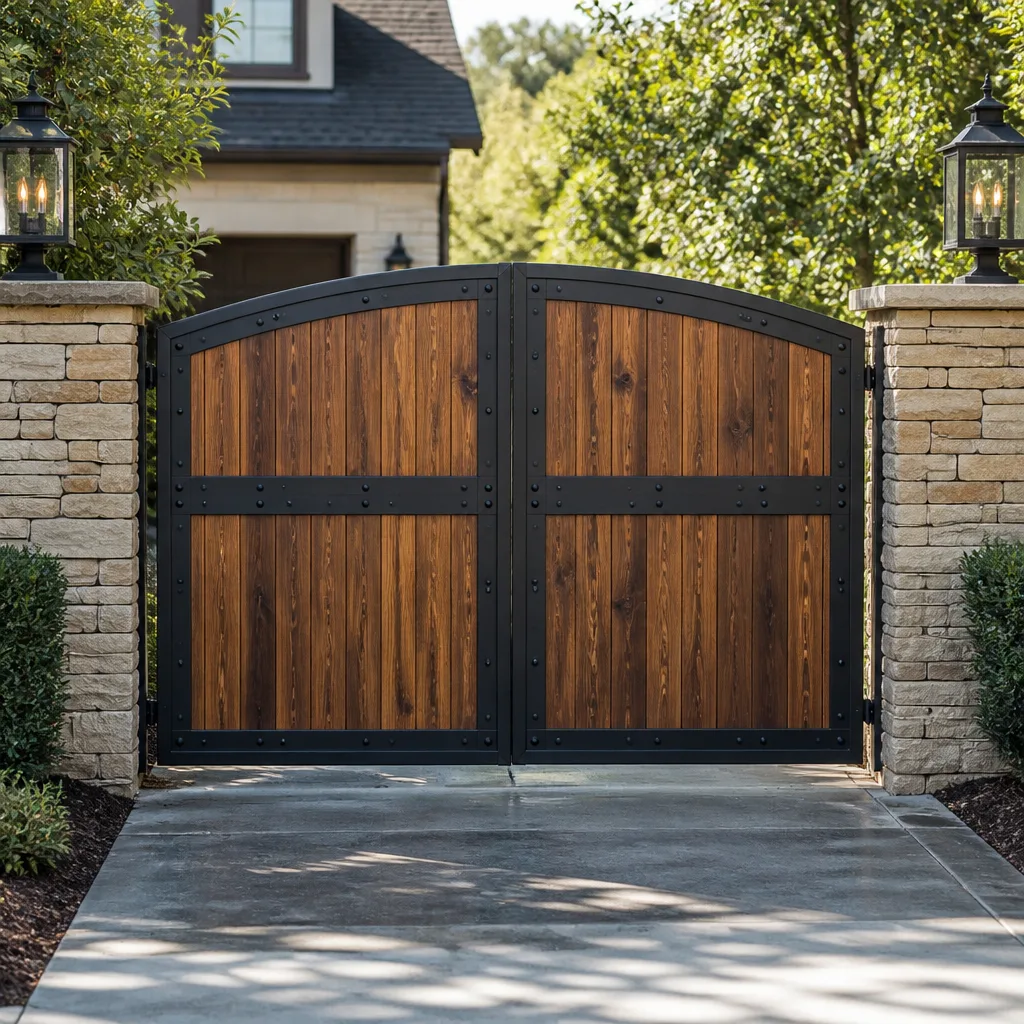 Wood & steel frame
 Farm & ranch
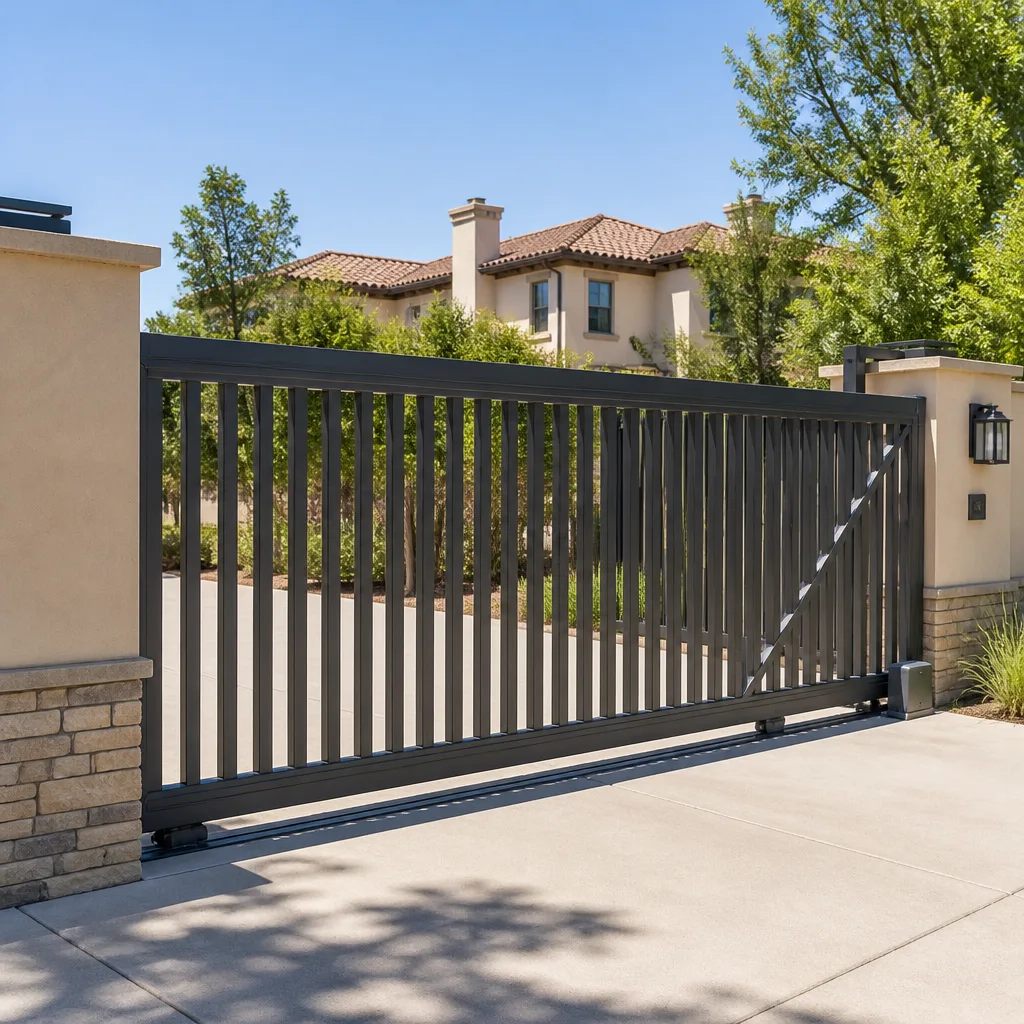 Sliding driveway gates
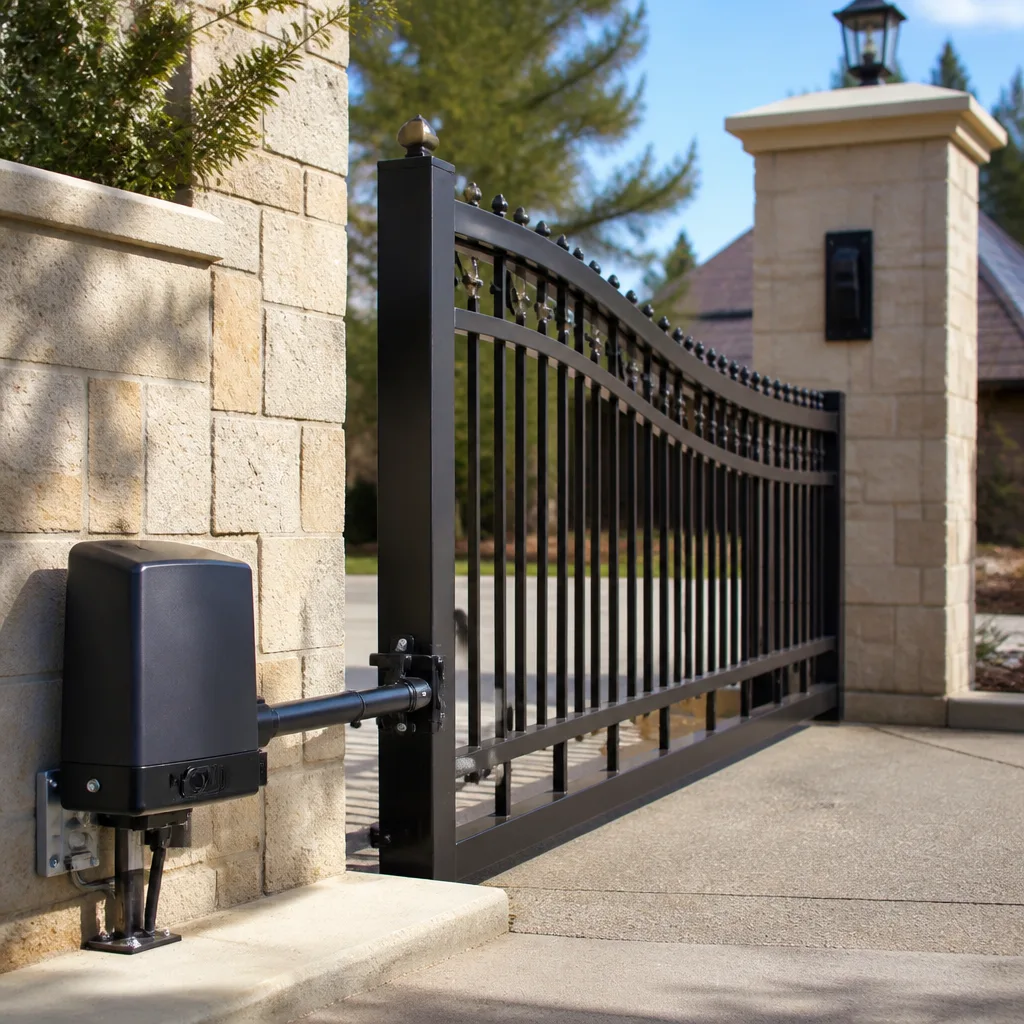 LiftMaster operators
Free on-site gate assessment - hinges, posts, and your LiftMaster or Nice gate operator checked before anything is quoted
The assessment is free and the quote is the invoice.
Get your free estimateGate Repair Permits, Codes & Inspections in TX: What You Need to Know
Walk down any street in Alamo Heights or Terrell Hills and you’ll see dozens of electric driveway gates. What you won’t see is the paperwork behind them. Here’s the counterintuitive part: most San Antonio homeowners assume a gate repair never needs a permit, and for a simple hinge replacement or sensor fix, they’re right. But the moment you add automation to a manual gate, move a post, or run new electrical, you’ve crossed into City of San Antonio Development Services territory. Skip that step and the work won’t fail an inspection. It simply won’t get one. And that omission has a way of surfacing years later, on a title search, at the exact moment you’re trying to sell. This guide walks through which gate projects trigger permits in San Antonio, what UL 325 requires, how HOAs layer on top of city code, and how to verify any previous contractor’s work before it becomes your problem.
Styles & brands we work with
Quick Answer
Most basic gate repairs in San Antonio, like replacing a hinge or a sensor, do not require a city permit. But adding automation to a manual gate, relocating a gate post, or connecting a gate operator to a 120V electrical line does require a City of San Antonio Development Services permit. Skipping it can flag your property as having an unpermitted improvement, which can delay or kill a home sale.
Table of Contents
- Which Gate Projects Trigger a City of San Antonio Permit
- What ‘Repair vs. Replacement’ Means Legally in Bexar County
- The UL 325 Standard: Why It Should Be Non-Negotiable
- HOA Deed Restrictions in Stone Oak, Alamo Ranch, and Shavano Park
- Low-Voltage vs. 120V Electrical: Where the Line Is
- How to Pull a Permit Record for Your Own Property
- Common Mistakes to Avoid
- When to Call a Professional
- Frequently Asked Questions
- The Bottom Line
Which Gate Projects Trigger a City of San Antonio Permit
The City of San Antonio Development Services Department draws a clean line between maintenance and construction. Replacing a worn wheel, swapping out a broken hinge, adjusting a sensor, or reprogramming a remote is maintenance. No permit, no inspection, no paperwork. The city doesn’t care about those. What it does care about is anything that changes the physical or electrical footprint of the gate system.
These projects DO require a San Antonio permit:
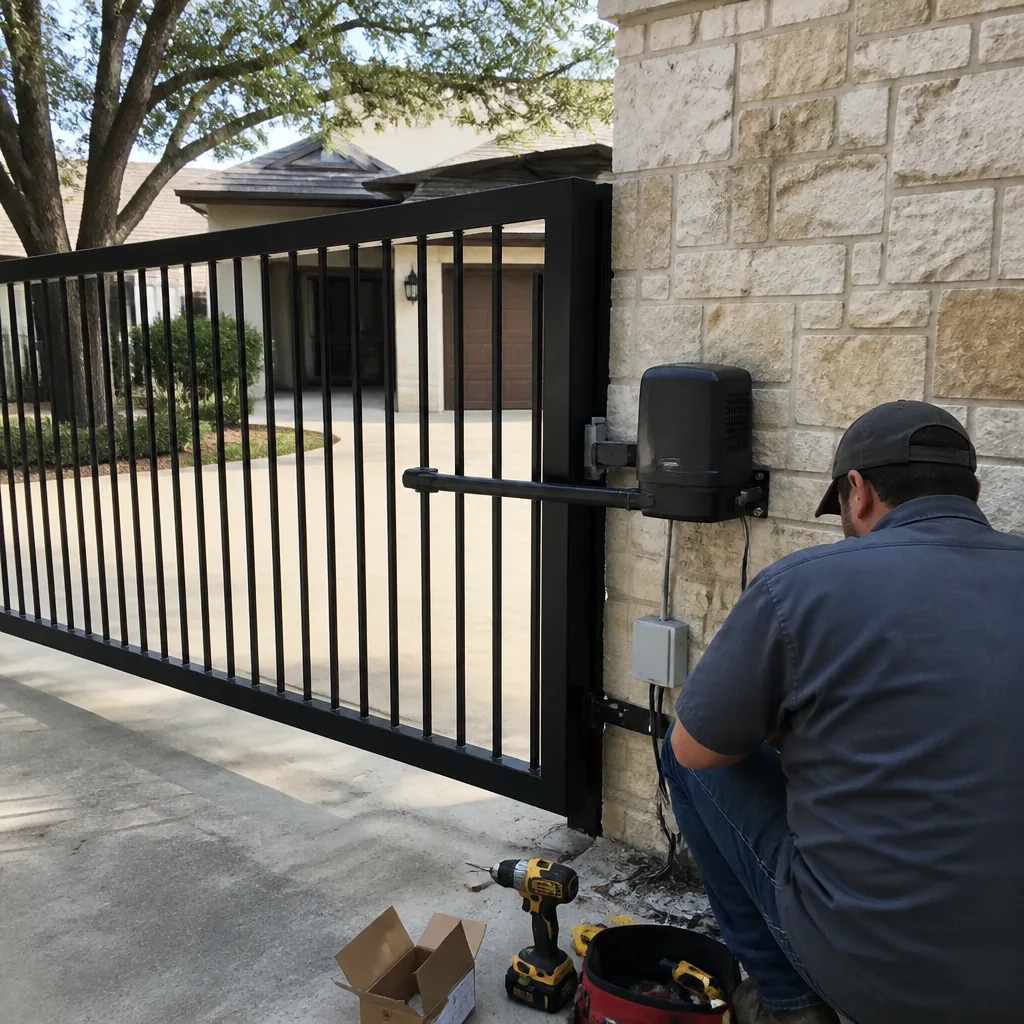
- Adding automation to a manual gate. This is the big one. If your gate currently swings by hand and you’re adding a LiftMaster or Mighty Mule operator, the city views it as a new installation, not a repair. A permit is required before the first wire is pulled.
- Moving or resetting a gate post. A gate post is a structural element. Digging one out and setting a new one changes the load path and the gate’s swing geometry. Development Services wants to see it on paper.
- Running new electrical to the gate. Any new circuit, any new conduit, any connection to a 120V or higher line requires an electrical permit. This applies whether you’re trenching a line from the house or tapping into an existing outdoor circuit.
- Replacing a gate operator with a different model that changes the electrical draw. Swapping a like-for-like motor is usually maintenance. Going from a 15-amp circuit to a 20-amp circuit because the new operator demands it is not.
These projects do NOT require a San Antonio permit:
- Replacing a sensor, keypad, remote receiver, or loop detector.
- Repairing a gate motor that has the same electrical specifications.
- Welding a cracked hinge or replacing a wheel.
- Adjusting the gate’s travel limits or force settings.
- Replacing a battery in a solar-powered operator.
When we perform gate repair in San Antonio, we tell homeowners before work begins whether the job is maintenance or requires a permit. It’s part of the written price, not an afterthought. The reason this matters: if you sell your home and the buyer’s title company finds unpermitted electrical work connected to a gate operator, they can require the permit to be retroactively pulled before closing. That process takes weeks, not days. In Bexar County’s spring and summer selling season, that kind of delay can cost you a buyer.
What ‘Repair vs. Replacement’ Means Legally in Bexar County
The phrase “repair vs. replacement” shows up in building codes across Texas, and Bexar County enforces it with a specific threshold. A repair restores the existing system to its original functioning condition without changing its design, load, or electrical characteristics. A replacement introduces something new, something different, or something that changes the way the system works.
Here’s the practical version, drawn from what we’ve seen on hundreds of San Antonio gate jobs:
- Repair: Your existing LiftMaster operator stopped working. We diagnose a failed capacitor, replace it, and the unit runs again. No permit.
- Replacement: Your existing manual gate needs to be automated. We install a FAAC operator, run new low-voltage wiring, and set safety edges. The gate now does something it never did before. Permit required.
- Repair: A weld on your gate frame cracked. We grind it, re-weld it, and paint it. The gate is restored. No permit.
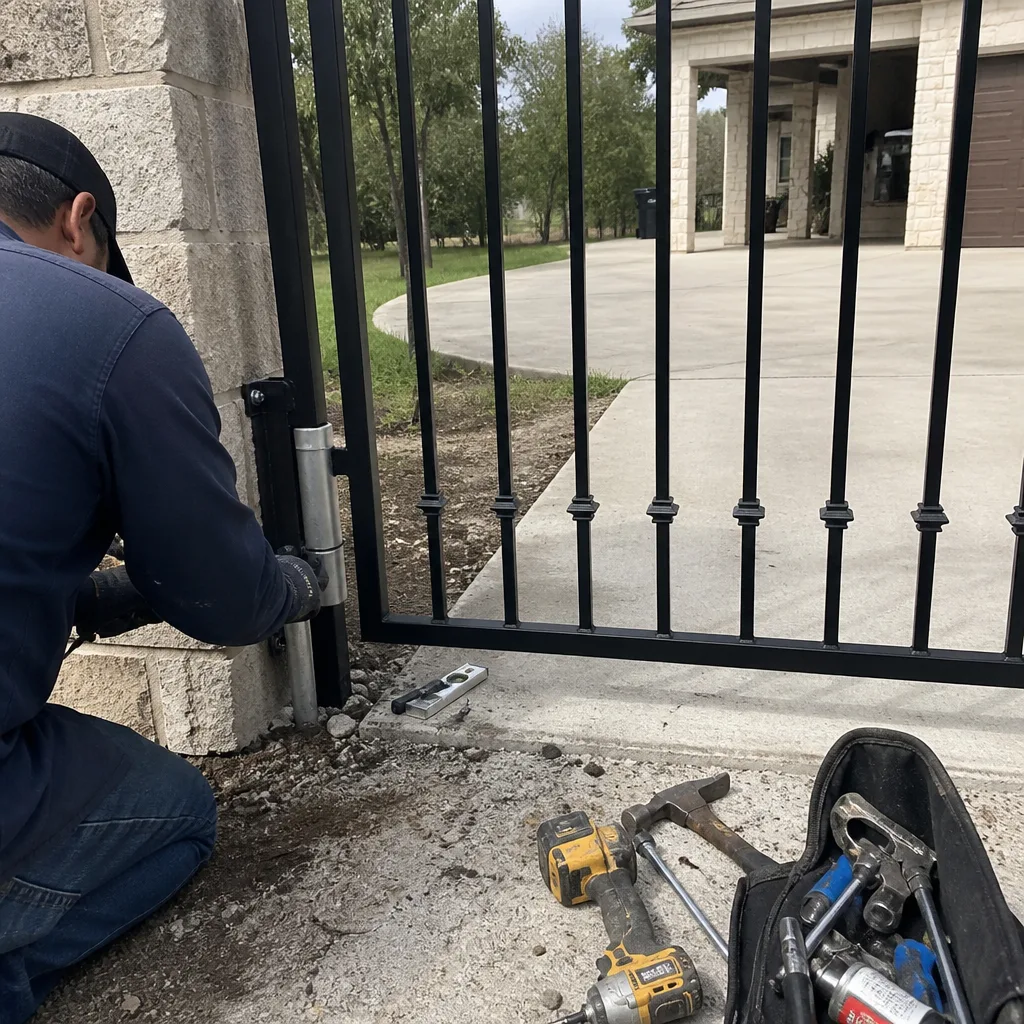
- Replacement: Your gate post rotted at the base and we dig it out and set a new one. The structural element is new. Permit required.
The distinction matters more than most people think. A contractor who waves it off with “we do this all the time, nobody gets a permit” is transferring risk to you. If the city finds out through a neighbor complaint or a subsequent inspection of other work on your property, you’re the one who pays the fine and the retroactive permit fee. Not the contractor. The City of San Antonio can also require the work to be opened up for inspection, which means digging up conduit or dismantling the gate.
The UL 325 Standard: Why It Should Be Non-Negotiable
UL 325 is the safety standard that governs automatic gate operators in the United States. It was written in response to real injuries and deaths involving automated gates, and it dictates how a gate operator must respond when it encounters an obstruction. If a contractor installing or repairing your electric gate in San Antonio doesn’t mention UL 325, that’s a problem worth taking seriously.
What UL 325 requires of every automated gate system:
- Entrapment protection devices. A gate must have at least two independent means of preventing entrapment. This usually means a combination of safety edges (pressure-sensitive strips), photo eyes (infrared beams), or an inherent entrapment sensor built into the operator itself.
- Monitored sensors. Photo eyes and safety edges on newer installations must be monitored, meaning if the sensor fails or is disconnected, the gate stops working. An unmonitored sensor can fail silently, leaving the gate dangerous.
- Force settings calibrated to the gate’s weight. The operator must be dialed in so that it stops and reverses when it hits resistance, not when it has already crushed something.
- Warning signage. Visible warning signs are required on both sides of an automated gate. It sounds cosmetic. It’s not. It’s part of the code.
- Secondary entrapment protection for swing gates with pinch points. Swing gates create pivot hazards where the gate meets the post. UL 325 requires guards or a design that eliminates those pinch points.
We service BFT, LiftMaster, FAAC, and Mighty Mule operators in San Antonio, and every one of them ships with UL 325-compliant design specifications. The operator itself is rarely the problem. The problem is the installation: a photo eye set at the wrong height. A safety edge that never got wired because it was “optional.” A force setting left at the factory default, which is almost always too aggressive for a residential gate. These are the things an inspection catches, and they’re the things a homeowner can’t easily verify on their own. A contractor who doesn’t mention UL 325 by name may not be installing to it.
HOA Deed Restrictions in Stone Oak, Alamo Ranch, and Shavano Park
City code is not the only layer of regulation in San Antonio. Many of the city’s largest planned communities carry deed restrictions that govern gates more aggressively than Development Services does. And here’s the part most contractors skip: when an HOA deed restriction conflicts with city code, the stricter requirement governs. The HOA cannot override the city, but it absolutely can require more than the city does.
What we’ve observed in specific San Antonio communities:
- Stone Oak. Many Stone Oak HOAs require architectural review committee approval for any new gate or any change to an existing gate’s appearance, including color changes. A permit from the city does not satisfy the HOA requirement. They are separate processes, and both must be completed.
- Alamo Ranch. The newer Alamo Ranch subdivisions frequently restrict gate height, material, and even the direction the gate swings. Some lots have zero-lot-line setbacks that make a slide gate impossible without a variance. That variance process can take six to eight weeks.
- Shavano Park. Shavano Park is a city, not an HOA, but its municipal code is stricter than San Antonio’s in some respects. Gate setbacks from the property line, in particular, differ from what San Antonio allows. A contractor working across both areas needs to know which code applies to your address.
The pattern we see most often: a homeowner gets a city permit for gate automation, the work passes inspection, and then the HOA sends a letter demanding the gate be modified or removed because the architectural review never happened. Now the homeowner has a permitted gate that they might have to tear out. The order of operations matters. HOA approval first, city permit second, construction third. We’ve watched homeowners lose thousands of dollars by doing it backward.
Low-Voltage vs. 120V Electrical: Where the Line Is
The most common electrical question we get about gate motor repair in San Antonio is whether low-voltage work needs a permit. The answer, from the City of San Antonio’s perspective, depends entirely on where the power originates.
If the gate operator is powered by a low-voltage transformer that plugs into an existing outdoor receptacle, the transformer itself and the wiring from the transformer to the operator are generally considered low-voltage and outside the permit requirement. That’s why many solar-powered and battery-backup gate operators from Mighty Mule and Ghost Controls are designed to work this way, it makes installation simpler from a code perspective.
But the moment you install a new circuit, a new outdoor receptacle, or hard-wire the operator to a 120V or 240V line inside a junction box, you need an electrical permit. The city wants to verify the circuit is properly sized, the wire is rated for outdoor burial or conduit, and the disconnecting means meets code. A gate operator on a 120V circuit must have a means of disconnecting power within sight of the operator. That’s a specific National Electrical Code requirement, and it’s one inspectors check.
In practice, we’ve found that many older San Antonio homes, especially in established neighborhoods like Castle Hills and Oak Park, don’t have a convenient outdoor receptacle near the gate. That means the gate automation project requires trenching a new line and installing a new circuit, which triggers the electrical permit even if the operator itself runs on low voltage at the gate. Homeowners frequently miss this distinction. They assume “it’s a low-voltage motor” means no permit, when the new outdoor circuit is the thing on the permit.
How to Pull a Permit Record for Your Own Property
Before you buy a home or before you sell one, you can verify whether gate work on the property had the proper permits. The City of San Antonio makes this easier than most people realize, but the process is not obvious if you haven’t done it before.
- Open the city’s permit search tool. The City of San Antonio Development Services Department maintains an online permit lookup at the city’s website under “Permits and Inspections.” You’ll search by address, not by owner name.
- Search for the specific property address. Enter the full street address, including the directional prefix if there is one (N, S, E, W). San Antonio addresses are notoriously confusing, and a wrong street direction will pull the wrong record or no record.
- Look under “Electrical” and “Building” permit types. Gate automation with 120V work will appear under electrical permits. Post relocation or gate structural work may appear under building permits. If you see nothing, it could mean the work was never permitted, or it could mean the work predates the city’s digital records.
- Check for a certificate of occupancy or final inspection. A permit that was pulled but never finalized is a red flag. It means the work was started and possibly completed, but the city never signed off. That’s a liability that transfers to the buyer unless resolved.
- Call Development Services directly. If the online search is inconclusive, call the Development Services office and ask for a permit history on the address. The phone line is staffed during business hours, and the records department can often find paper permits that never made it into the digital system.
This is a 20-minute task that can save you thousands. We’ve had San Antonio clients who discovered unpermitted gate work on a home they were about to buy, used the discovery to negotiate the price down, and then hired us to bring the work into compliance. The permit record is also something a title company will review. If the title company flags it, you’ll be doing this lookup anyway, but under contract deadline pressure.
Common Mistakes to Avoid
- Assuming a repair never needs a permit. In San Antonio, most repairs don’t, but automation, new circuits, and post relocation do. The cost of assuming wrong is a retroactive permit and a re-inspection.
- Letting the contractor handle permits without verifying they actually pulled one. Some contractors charge for the permit, keep the money, and do the work without it. That charge should appear as its own line item on your written estimate, and you should see the permit number before work starts.
- Skipping HOA review in Stone Oak or Alamo Ranch. The city permit will not protect you from the HOA. They are separate jurisdictions with separate enforcement powers, and the HOA can make you remove the gate.
- Installing a gate operator without UL 325 entrapment protection. This is the mistake that costs people more than money. A gate that doesn’t stop and reverse under pressure is a hazard to children and pets, and it’s a code violation.
- Using a handyman instead of a gate-specific contractor for electrical work. Gate operators on 120V circuits require a licensed electrical contractor for the circuit work. A general handyman without that license may do the work fine, but if the city inspects it, it fails on credentialing alone.
- Not checking the permit history before buying a home with an existing gate. Unpermitted work discovered after closing becomes your problem, not the seller’s. The time to look is before you sign.
When to Call a Professional
Anything involving new electrical, structural changes, or automation of a previously manual gate is a professional job, full stop. The permit requirements alone make it worth hiring someone who knows the San Antonio approval process and won’t leave you with an unpermitted installation. You should also call a professional if you’re buying or selling a home and need the gate work verified, if your gate operator is behaving erratically and you’re not sure whether it meets UL 325 safety requirements, or if your HOA has sent a letter about the gate’s condition or placement. Warden Gate Repair San Antonio offers free estimates in San Antonio, call (940) 531-3336 and we’ll tell you exactly what the job requires before you commit.
Frequently Asked Questions
No, most gate repairs in San Antonio do not require a permit, including hinge replacement, sensor fixes, and gate motor repair with like-for-like parts. A permit is only required when you add automation, relocate a post, or install new 120V electrical. If you’re not sure whether your repair crosses that line, call (940) 531-3336 and we’ll tell you over the phone.
City of San Antonio permit fees vary based on the scope of work, with simple electrical permits typically costing a few hundred dollars and structural permits running higher. The exact fee depends on the valuation of the work being done. A professional contractor will include the permit fee as a separate line item on your written estimate, not bury it in the labor charge.
Only if the opener is low-voltage and plugs into an existing outdoor receptacle with no new circuit installed. If you’re running new electrical, hard-wiring to 120V, or adding automation to a manual gate, the City of San Antonio requires a permit. Doing it without one creates an unpermitted improvement that can surface on a title search when you sell.
UL 325 is the safety standard for automatic gate operators, and yes, it applies to residential gates in San Antonio. It requires entrapment protection devices, monitored sensors, proper force settings, and warning signage. A contractor who doesn’t mention UL 325 during an electric gate repair or installation may not be installing to code.
Yes, if your HOA’s deed restrictions require architectural review for gate work, you need HOA approval first, then the city permit, then construction. Communities like Stone Oak and Alamo Ranch commonly require both. The HOA cannot override the city code, but they can impose additional requirements, and you must satisfy both.
Use the City of San Antonio Development Services online permit lookup and search by your property address under electrical and building permit types. If the search is inconclusive, call the Development Services office directly and request a permit history. This is worth doing before you buy a home with an existing automated gate, because unpermitted work becomes the buyer’s liability after closing. Call us at (940) 531-3336 if you find something and want a professional opinion on how to bring it into compliance.
The Bottom Line
Gate permits in San Antonio are not complicated once you know where the line is. Basic repairs: no permit. New automation, new electrical, or structural changes: permit required, along with HOA approval where deed restrictions apply. UL 325 is the safety standard that should guide every installation, and any contractor who refuses to talk about it is not someone you want touching your gate. Unpermitted work has a long tail, it follows the property, not the person who did the work, and it tends to surface at the worst possible moment. The good news is that checking the work is fast, and bringing it into compliance is usually straightforward. The most expensive gate permit is the one you pull retroactively.
Written by Cole Rafferty, Owner at Warden Gate Repair San Antonio, serving San Antonio since 2008.
If you need a gate repaired, automated, or inspected in San Antonio, call Warden Gate Repair San Antonio at (940) 531-3336. We’ll give you a written price before any work starts, and every repair is covered by our 365-Day Done Right Promise.
See the difference
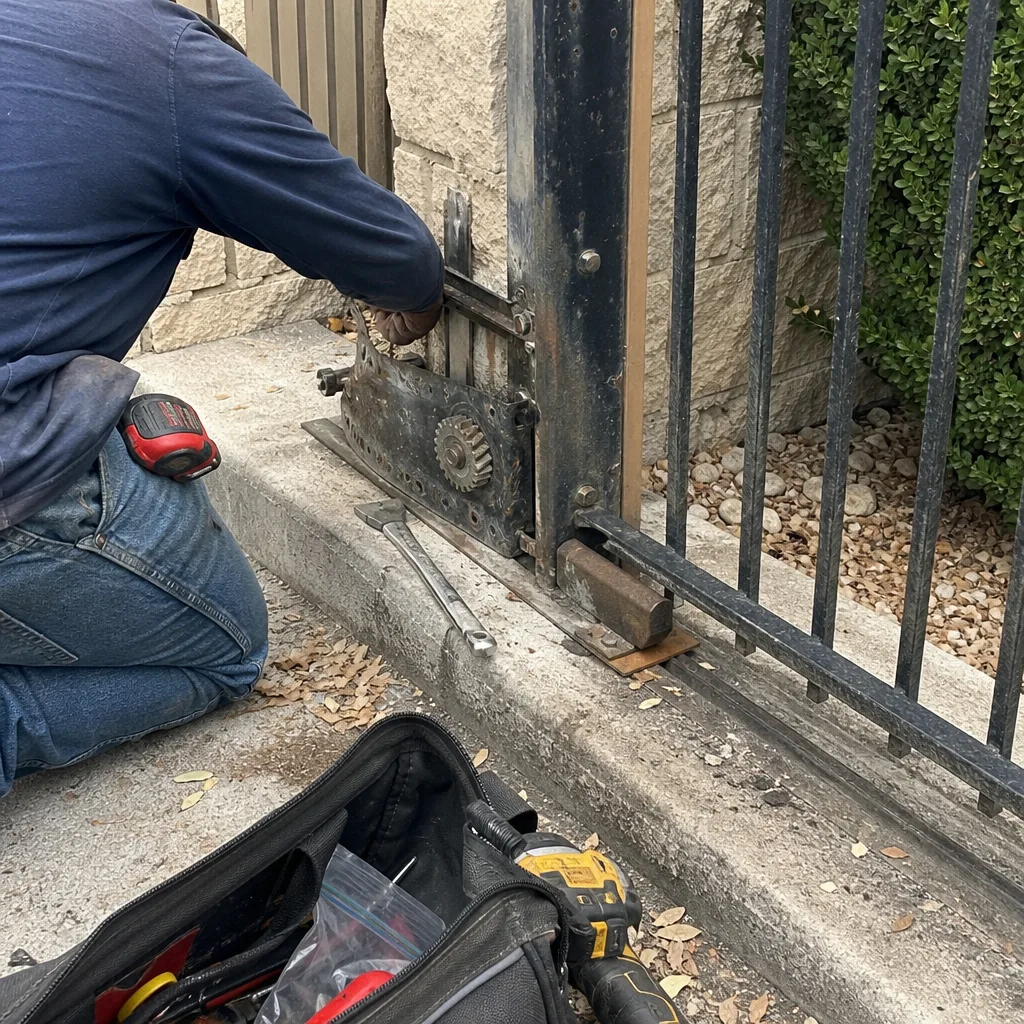 Before
 After
After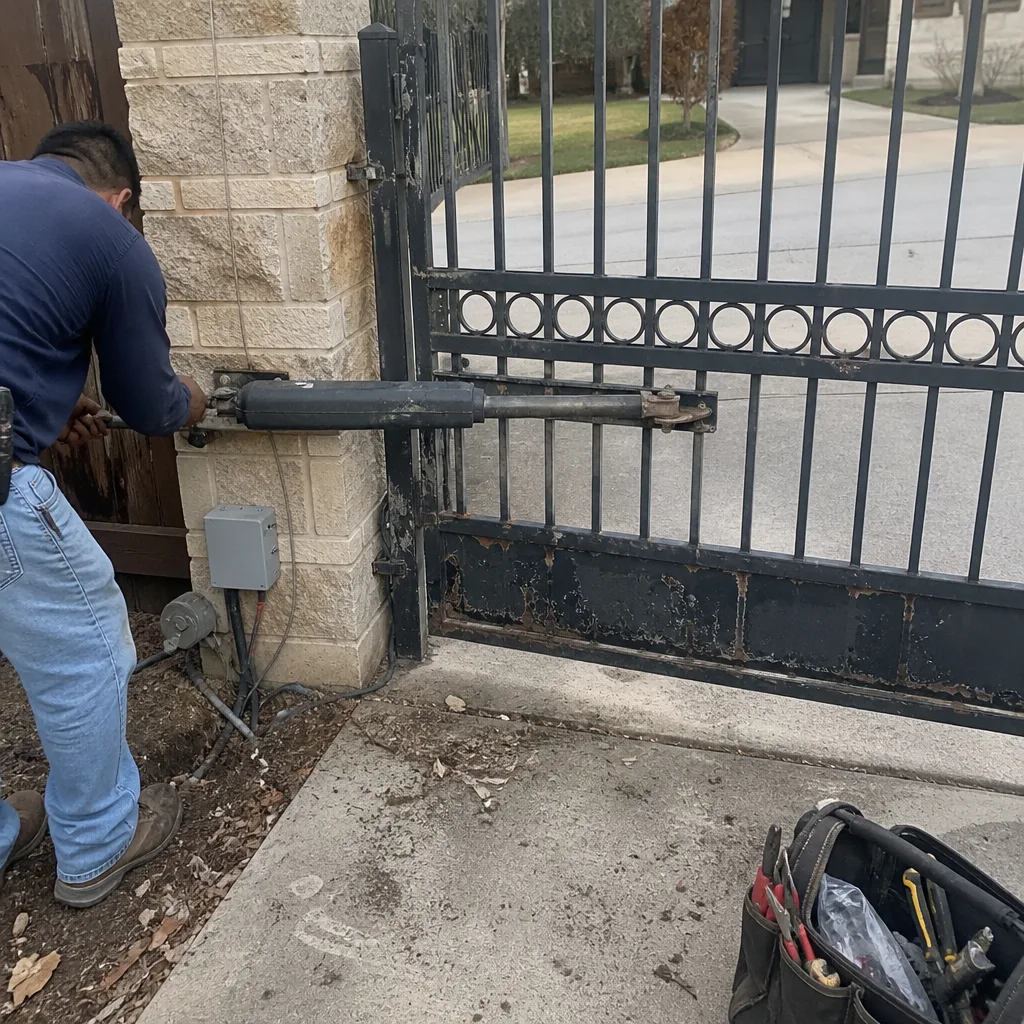 Before
 After
After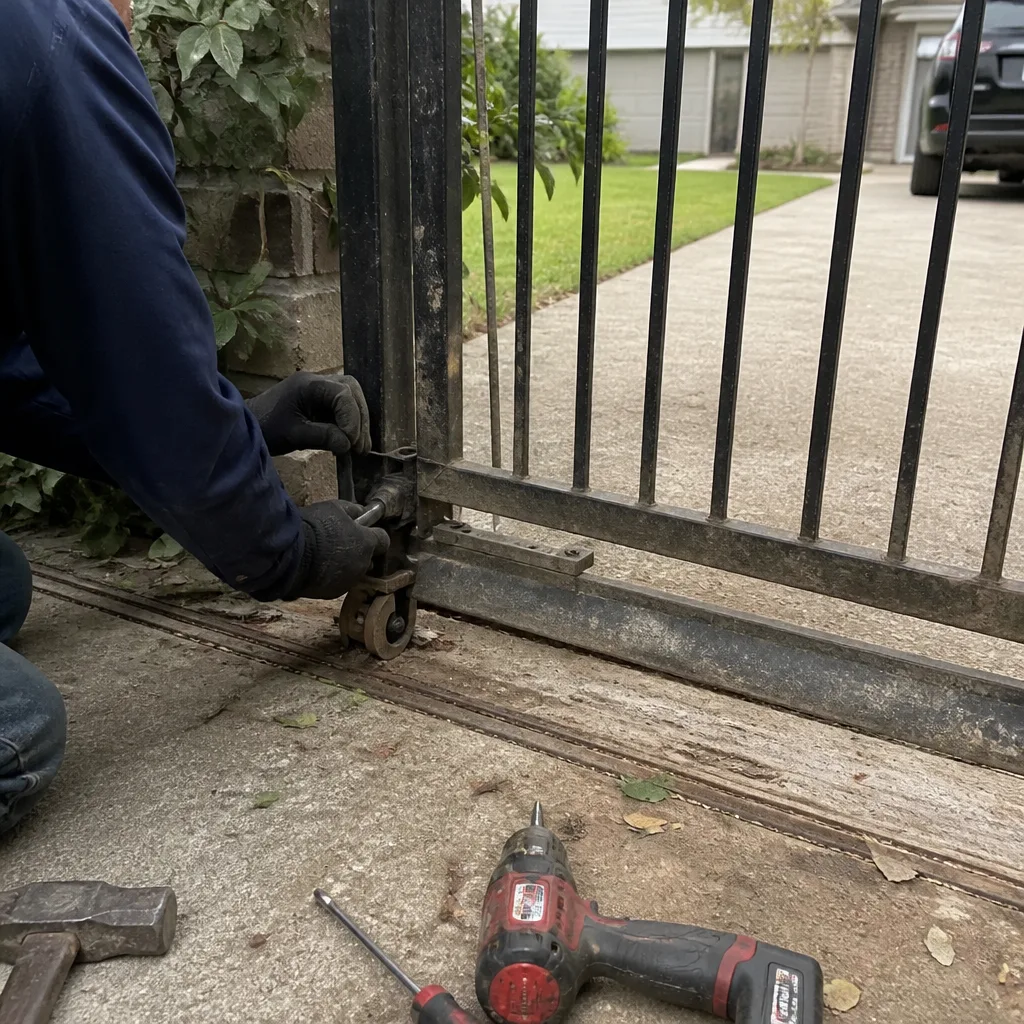 Before
 After
After