
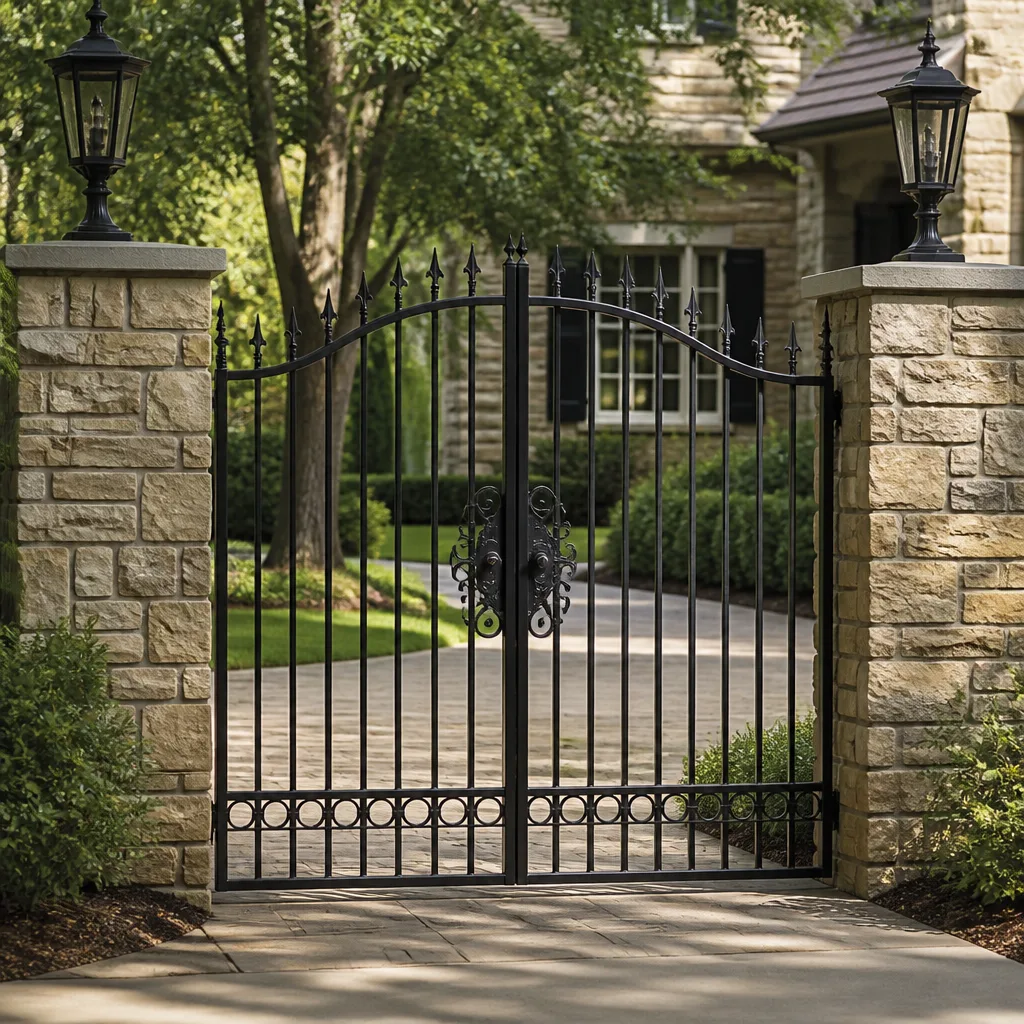
 Wrought iron
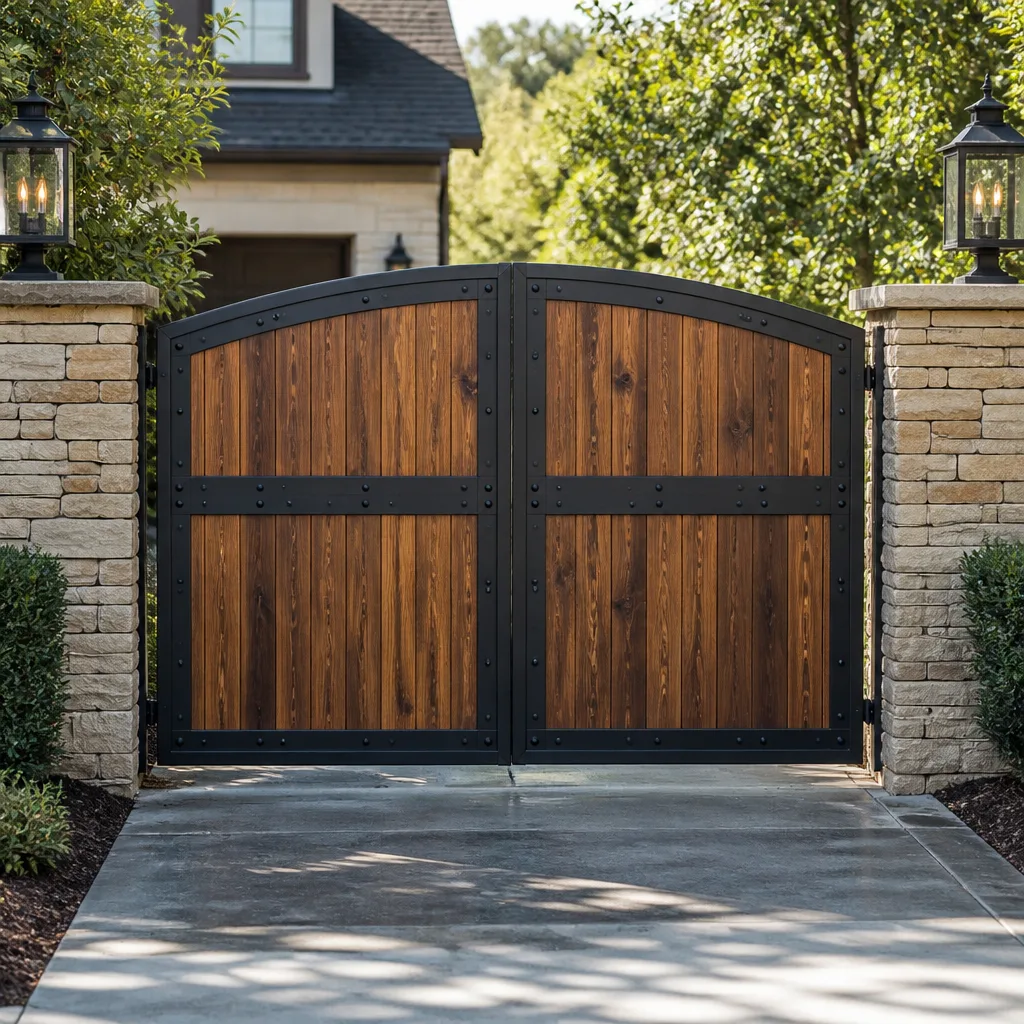 Wood & steel frame
 Farm & ranch
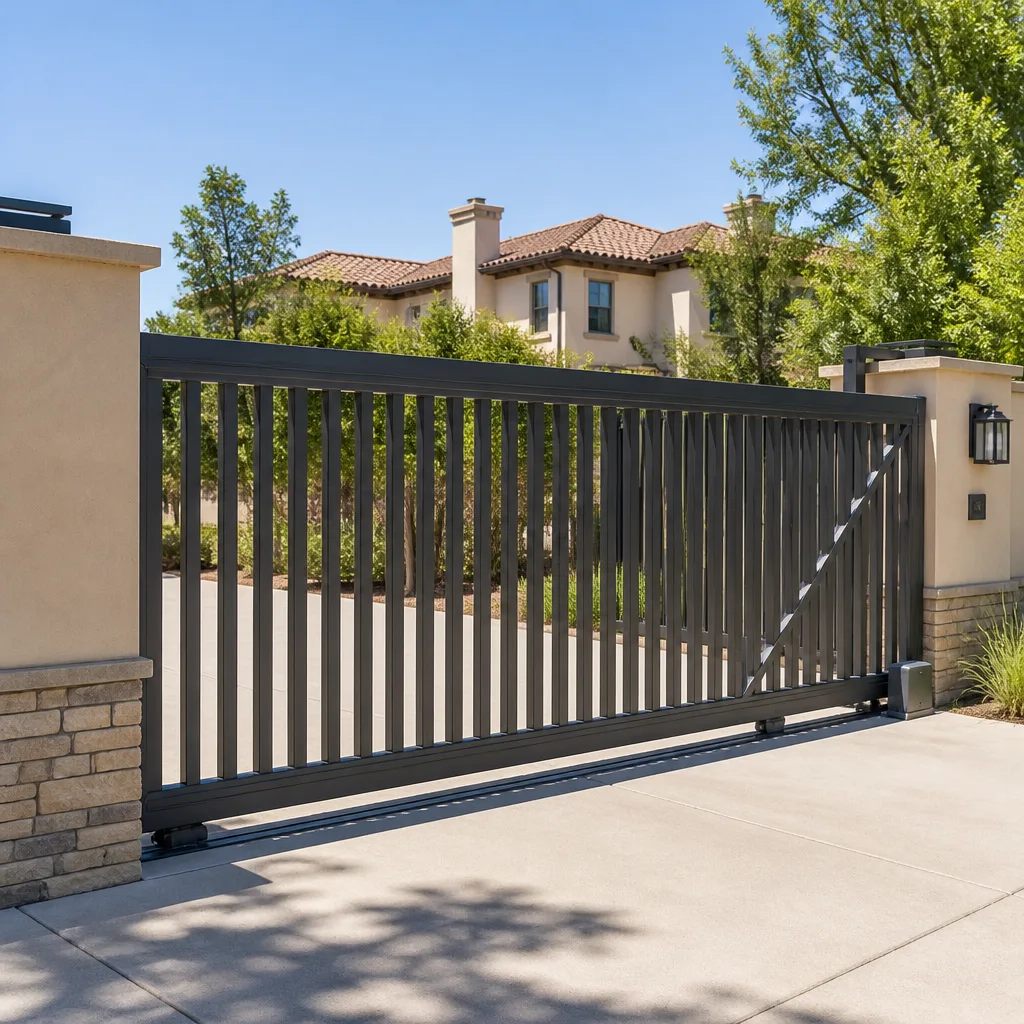 Sliding driveway gates
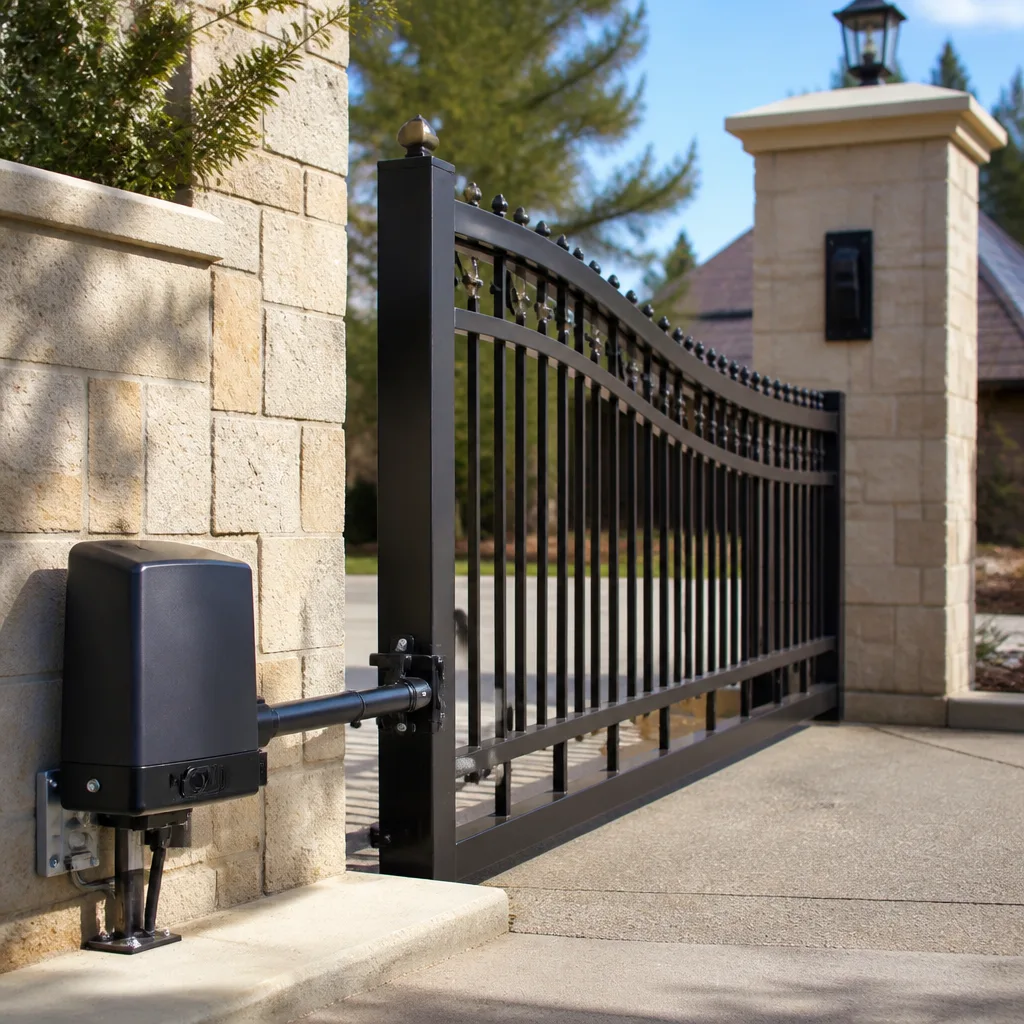 LiftMaster operators
Free on-site gate assessment - hinges, posts, and your LiftMaster or Nice gate operator checked before anything is quoted
The assessment is free and the quote is the invoice.
Get your free estimateLinear Hinge & Roller Replacement: The San Antonio Owner’s Guide
We stock and install Linear-compatible hinges and rollers across San Antonio, with most replacements running between $185 and $420 installed per hinge assembly, depending on gate weight and access. Our trucks carry the common Linear roller sizes and hinge configurations, so most jobs are done in a single visit, usually under two hours. The typical story we hear starts the same way: the gate starts dragging on the ground, or it makes a grinding sound halfway through its swing, and by the time someone calls us, the roller has worn flat on one side and the hinge is taking weight it was never meant to carry. That’s the point where the part fails fast, and the fix is no longer a maybe later thing.
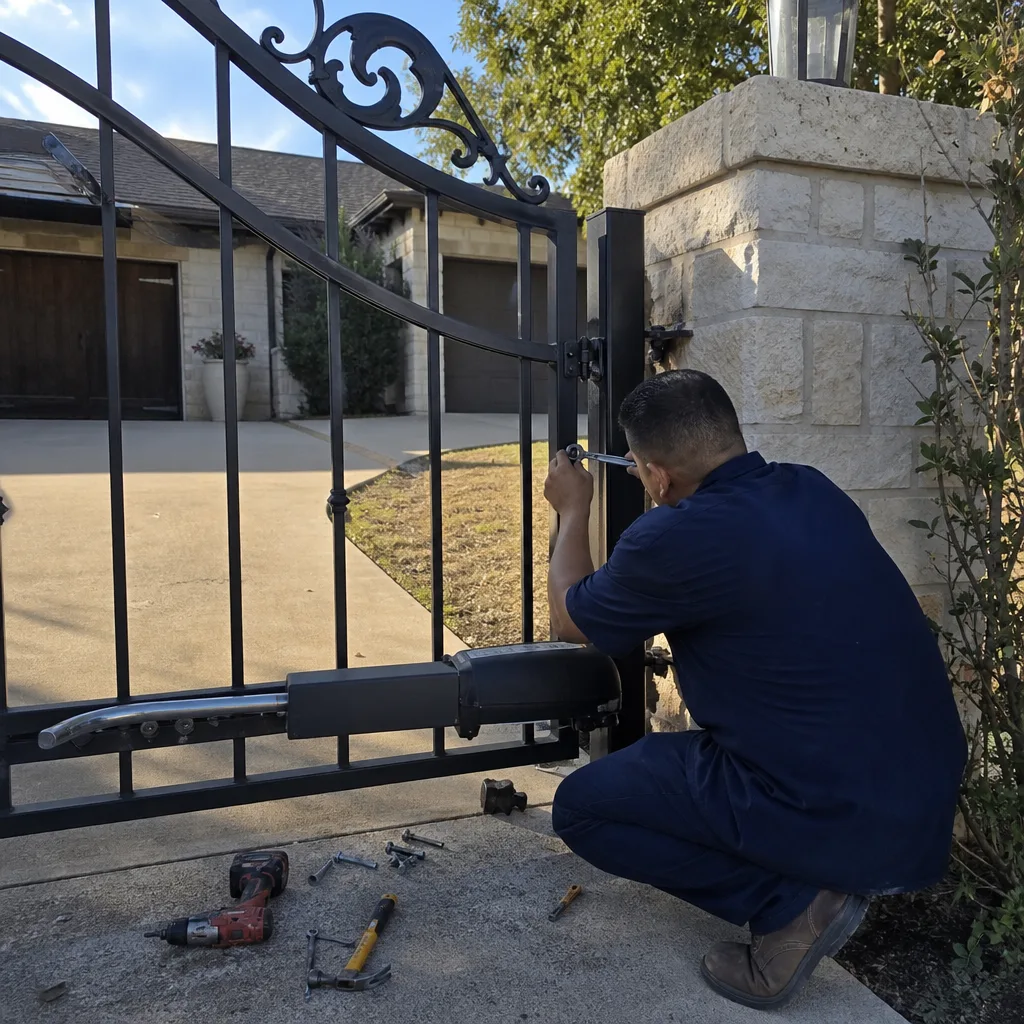
Which Linear Models This Applies To
Linear’s swing gate hardware appears across a broad range of operator models, from the older APeX and LRA series up through the current SL and gate controller lines paired with ornamental steel or aluminum gates. The rollers and hinges themselves are not the operator; they’re the load-bearing hardware that carries the gate leaf, and Linear specs them by gate weight, leaf width, and post type. Here’s the thing most owners don’t realize until they’re standing in front of a failed gate: Linear doesn’t manufacture one universal roller. The roller’s stem diameter, wheel width, and bracket offset vary by whether the gate is a single leaf or double leaf and whether it’s mounted on a masonry post or steel column. If you swap in the wrong stem diameter, the gate sits a half inch too high and the operator’s arm has to fight it every cycle. We match parts by measuring the old roller’s stem and wheel before quoting the replacement, and we confirm the hinge leaf pattern on site. For Linear equipment, we lean toward OEM or direct-equivalent aftermarket parts with the same temper and bearing spec, because the cheaper import rollers we’ve pulled out of San Antonio gates tend to wear flat within a season, especially on the south and west sides of town where the sun beats on the metal all afternoon.
Styles & brands we work with
Signs Your Linear Hinge & Roller Replacement Is Failing
- The gate drags or scrapes the driveway. This is the most common tell. The roller wheel has worn flat, the bracket has bent from repeated stress, or the hinge has sagged enough that the leaf’s weight has shifted onto the ground instead of the wheel. Every cycle after this point is doing more damage.
- A grinding or squealing noise during the swing. The bearing inside the roller is dry or seized, and the wheel is now sliding rather than rolling. In San Antonio’s dust and heat, the factory grease in sealed rollers gives out faster than the spec sheet suggests, and once the bearing starts to go, the noise is the warning shot before total failure.
- The gate wobbles or leans toward the opening side. Hinges wear at the pin, not just at the leaf. When the top hinge pin develops play, the gate leaf begins to lean outward, which loads the bottom roller at an angle and chews it up from the inside edge of the wheel.
- The operator strains or reverses mid-cycle. A Linear operator’s obstruction sensor assumes something is in the way when the current draw spikes. A failed roller creates constant friction, so the operator may intermittently reverse or stop. Owners sometimes blame the motor when the real culprit is forty dollars’ worth of hardware underneath the gate.
- Visible flat spots or cracks on the roller wheel. If you can see a flat section on the wheel or a fracture line in the nylon, that roller is finished. It’s not worth watching it fail completely, because when it does, the gate can drop and tear the hinge or bend the operator arm.
See the difference
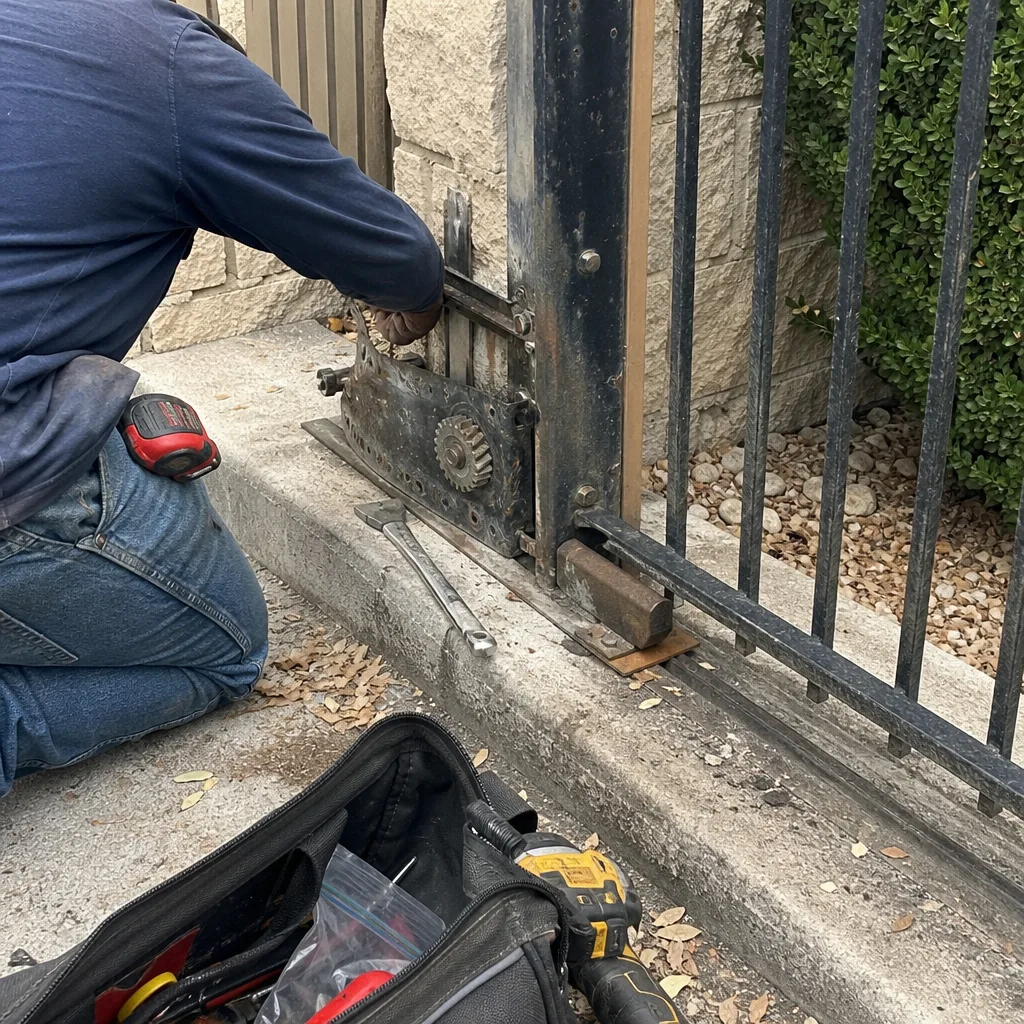 Before
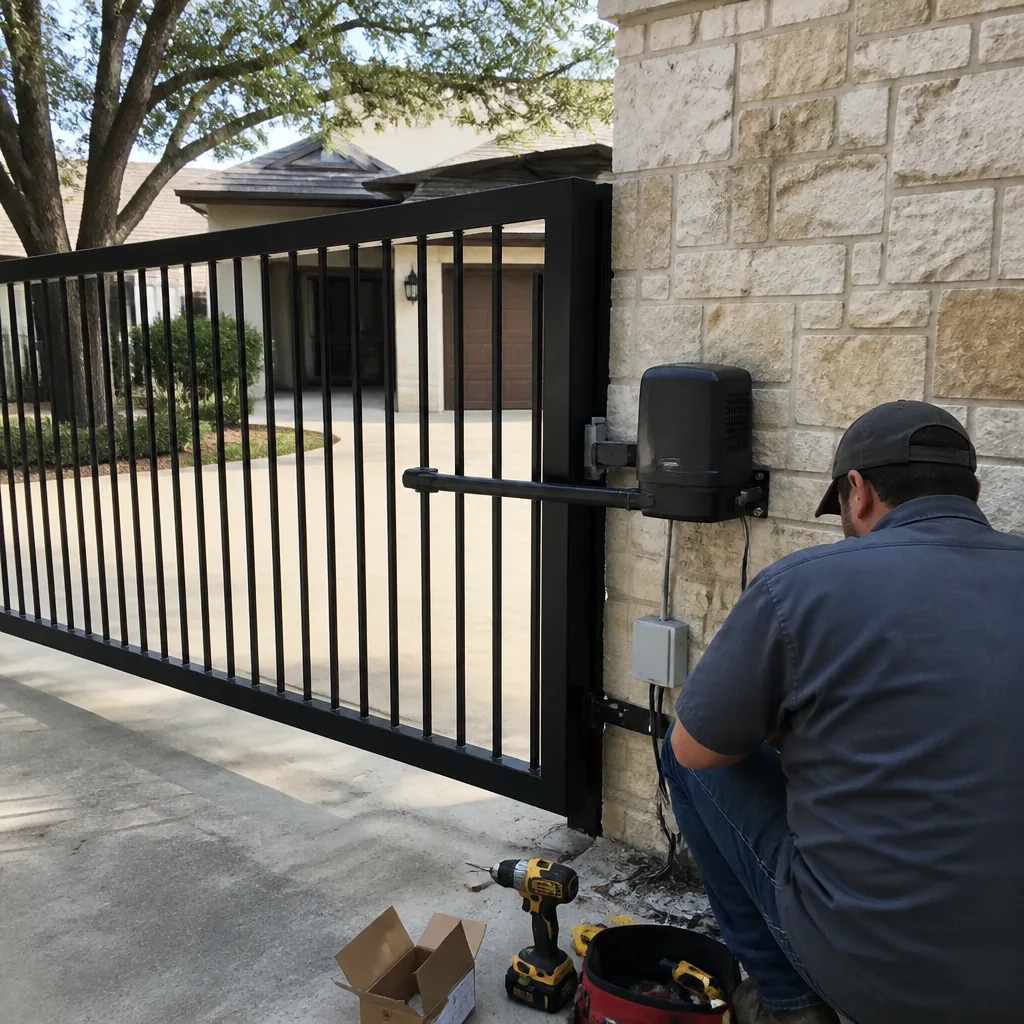 After
After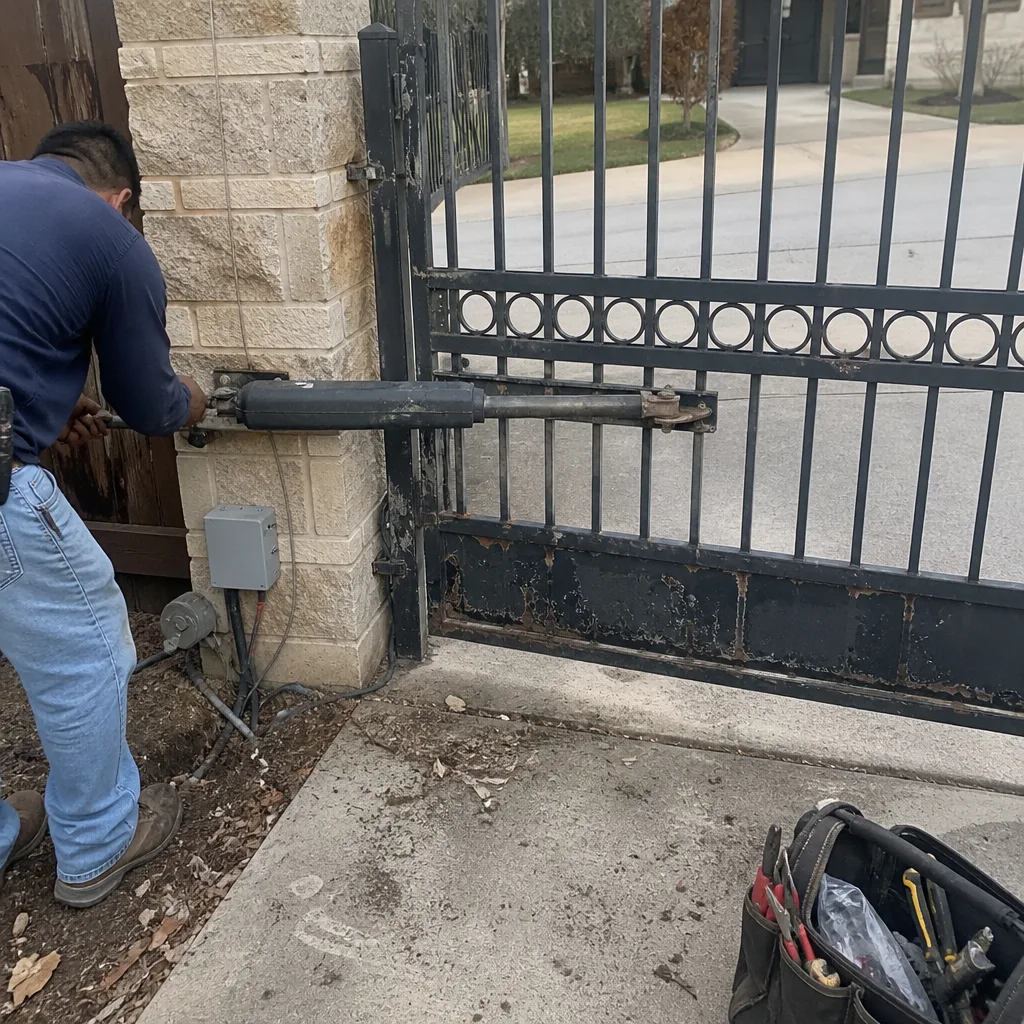 Before
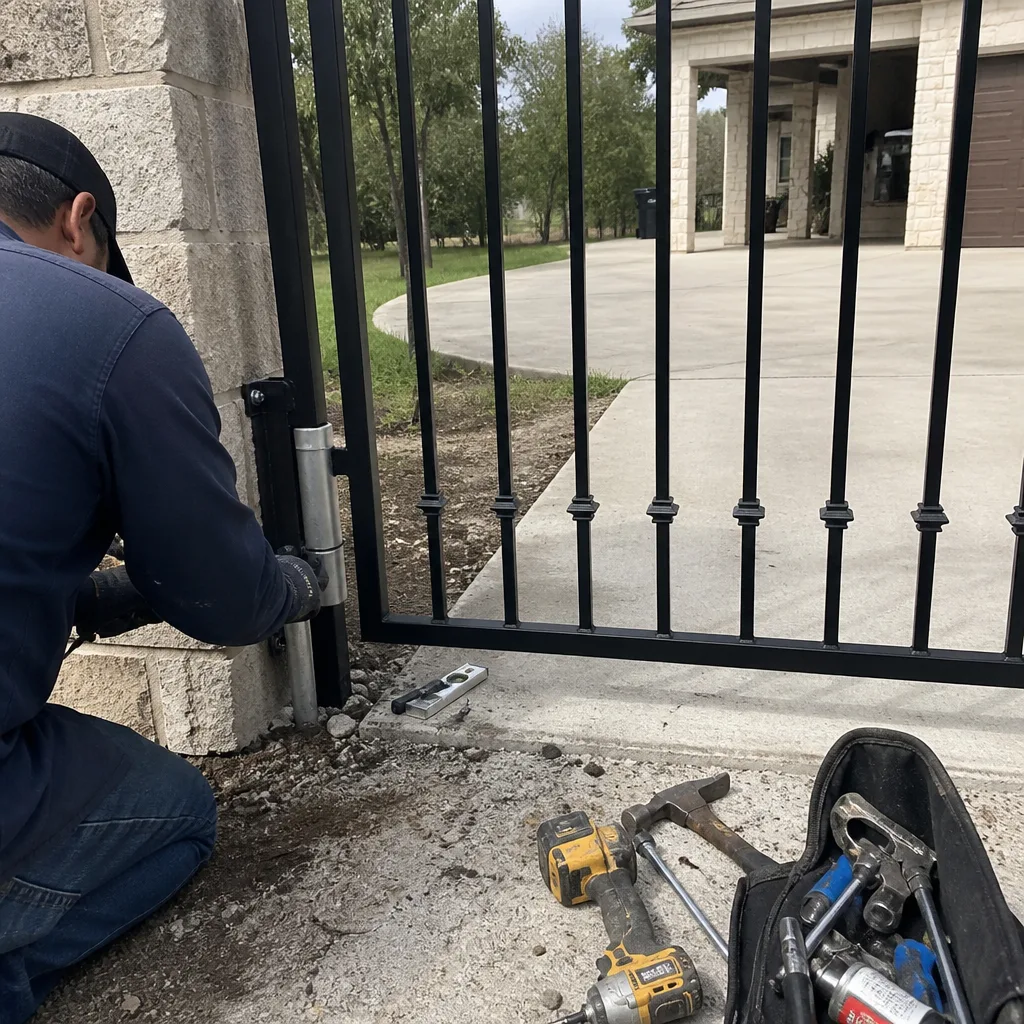 After
After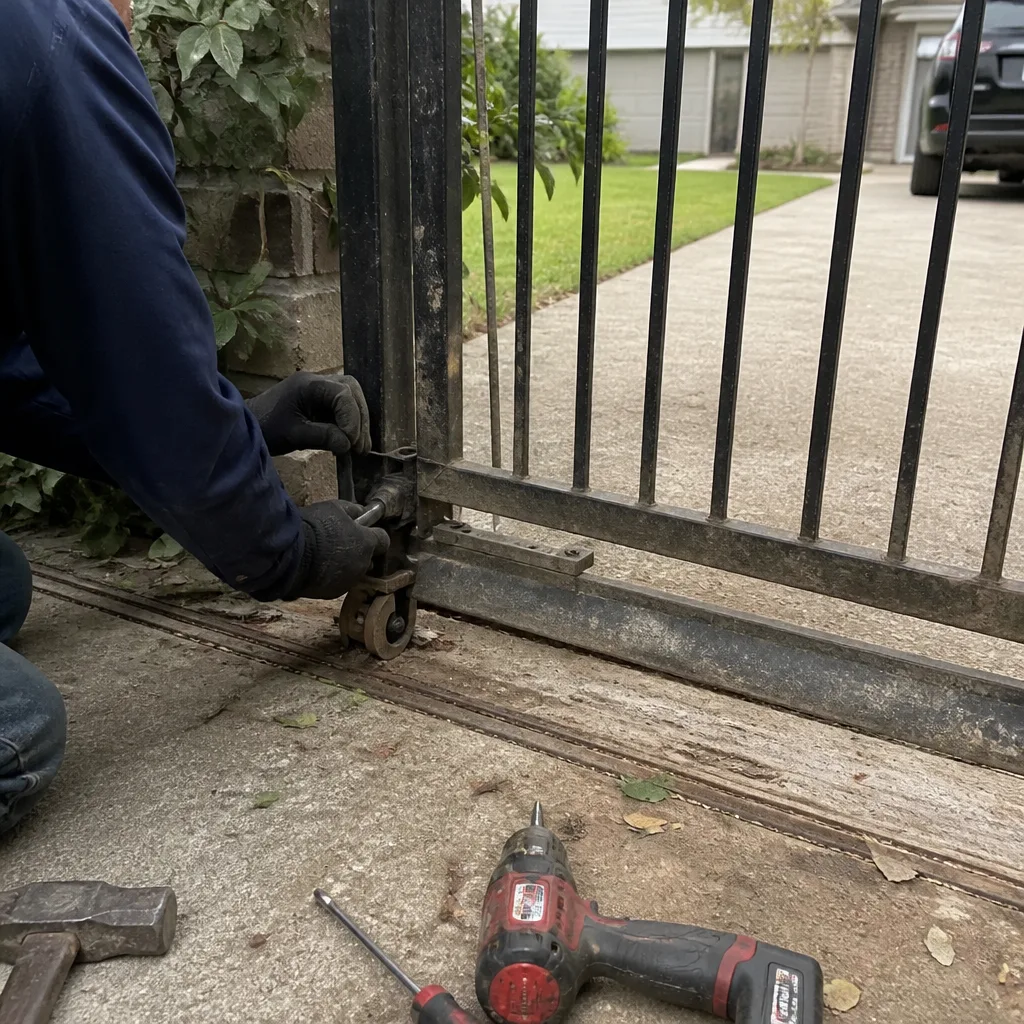 Before
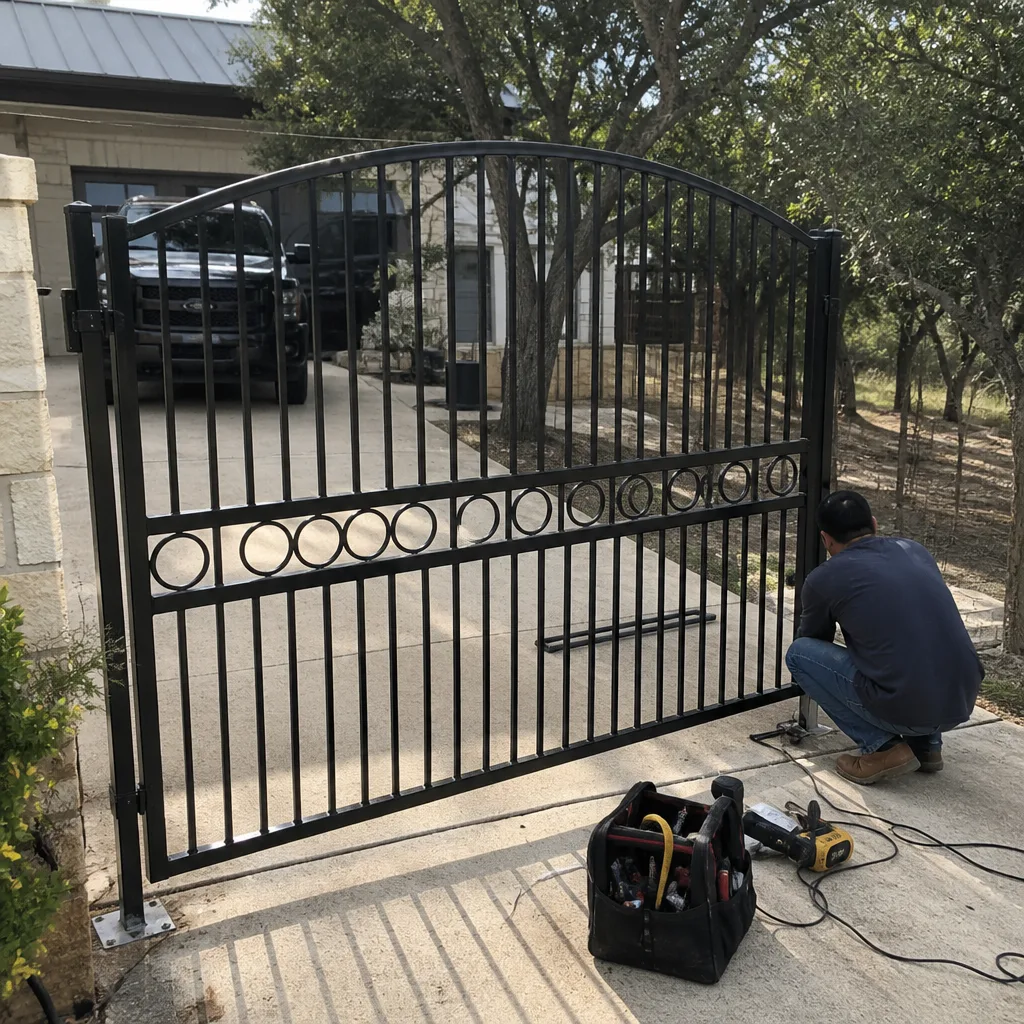 After
AfterReplacement Cost & What’s Included
In San Antonio, hinge and roller replacement on a Linear system typically lands between $185 and $420 per hinge assembly installed, with the roller itself usually making up $35 to $85 of that. The range moves based on how many hinges are on the gate, whether the post is masonry or steel, how heavy the leaf is, and whether we’re replacing one roller or doing the full hinge-and-roller set. Our price is the written price; we quote the job before any work starts, and that number is what you pay. There’s no “while we’re in there” line item added at the end. The replacement includes removing the old hardware, confirming the new hinge and roller match the existing spacing, adjusting the gate height and level, and re-testing the operator’s travel and force settings so the Linear motor isn’t fighting loose or misaligned hardware. The work carries the 365-Day Done Right Promise in writing: if the part or the install fails within a year, we come back and make it right at no charge. Cole Rafferty put that guarantee in place because a gate hinge repair you have to redo in six months isn’t a repair; it’s an interruption with extra steps.
DIY or Call Us?
You can safely identify the problem yourself: lift the gate leaf slightly at the latch end and see if the roller keeps contact with the ground track, check for visible flat spots, and listen for grinding during the swing. What you shouldn’t do is unbolt a loaded hinge or roller bracket while the gate leaf is still supported by it. A heavy ornamental steel gate can weigh several hundred pounds, and when that weight shifts suddenly, it doesn’t give a warning. We’ve seen the aftermath of a DIY hinge swap gone wrong, and the medical bill exceeded the gate repair by a wide margin. If the gate is aluminum and light, and you’re reasonably handy, a roller swap is doable with the leaf properly blocked and supported. If the gate is steel, double-leaf, or over about eight feet wide, we’d rather you call (940) 531-3336 and let us handle it with the right support stands and the right part. Tell me what it’s doing wrong – I’ll tell you what it costs to fix it, in writing, before we start.
FAQs
Expect five to eight years from factory Linear hinge and roller hardware in San Antonio, with the lower end applying to unshaded gates on the sun-exposed south and west sides of town, where heat and UV accelerate roller breakdown and dry out bearing grease. Gates that are used heavily, like those at commercial properties or multi-vehicle households, tend to land closer to the five-year mark. Call (940) 531-3336 if your rollers are at or past that age and the gate’s started complaining.
A worn hinge pin or roller bearing is a replace-not-repair part; the bearing is sealed, and the hinge pin can’t be built back up to spec once it’s worn, so the only honest fix is new hardware that matches the Linear spec. Attempting to shim or re-sleeve a worn hinge usually buys a few months at most and leaves the gate applying uneven load to the operator. We’ll show you the worn part and explain what failed before we install the replacement.
Most single-gate hinge and roller replacements on a Linear system take under two hours from arrival to final operator adjustment, including checking gate level and re-testing travel limits. Double gates or gates with multiple failing hinges may run to a half-day job. We’ll give you the time estimate with the written price before we start.
Yes, we stock the common Linear-compatible roller stem diameters, wheel widths, and hinge configurations on our service vehicles for San Antonio jobs, which lets us complete most replacements in a single visit. For unusual gate sizes or non-standard post types, we order the exact part and schedule the install once it’s in hand. We also carry parts for LiftMaster, Mighty Mule, and Ghost Controls systems for the mixed-brand gates we see across the city.
Written by Cole Rafferty, Owner, Warden Gate Repair San Antonio at Warden Gate Repair San Antonio, serving San Antonio and nearby areas.