
Last updated October 16, 2026
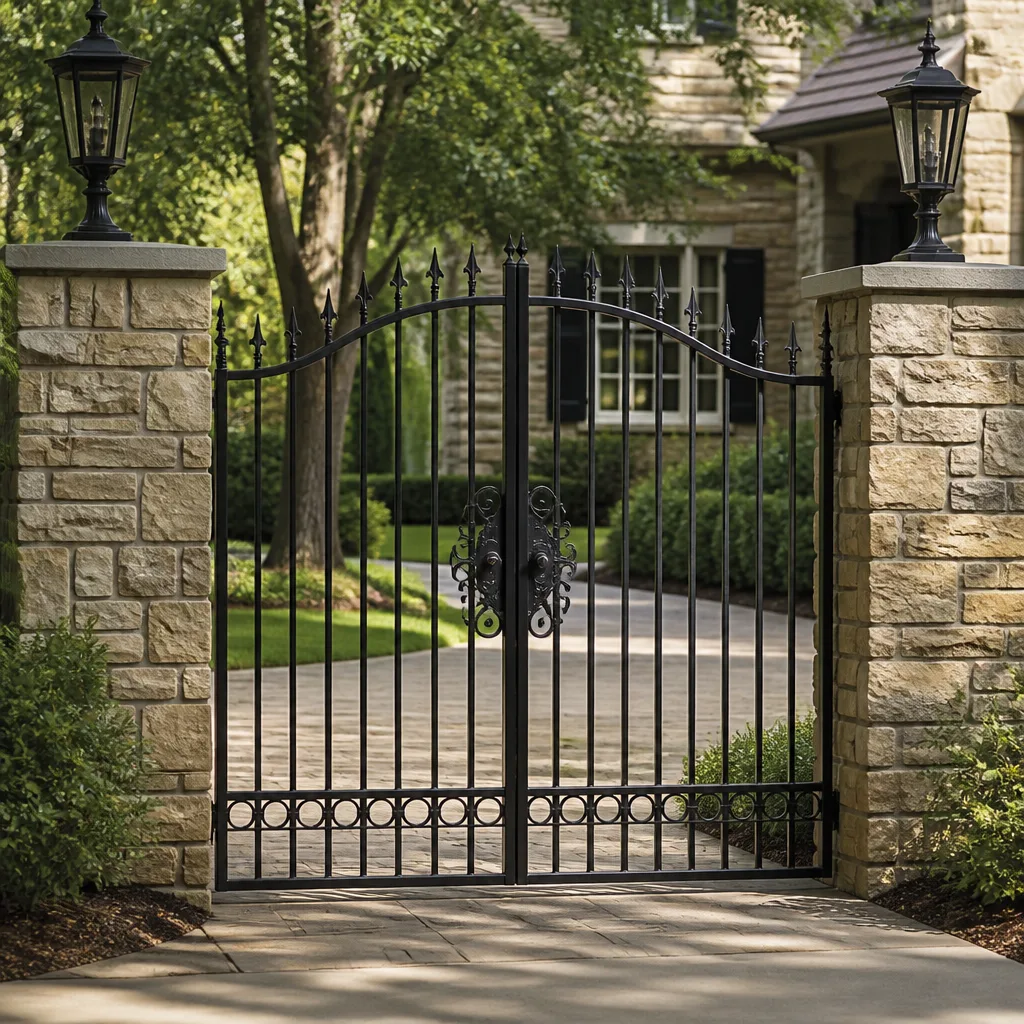 Wrought iron
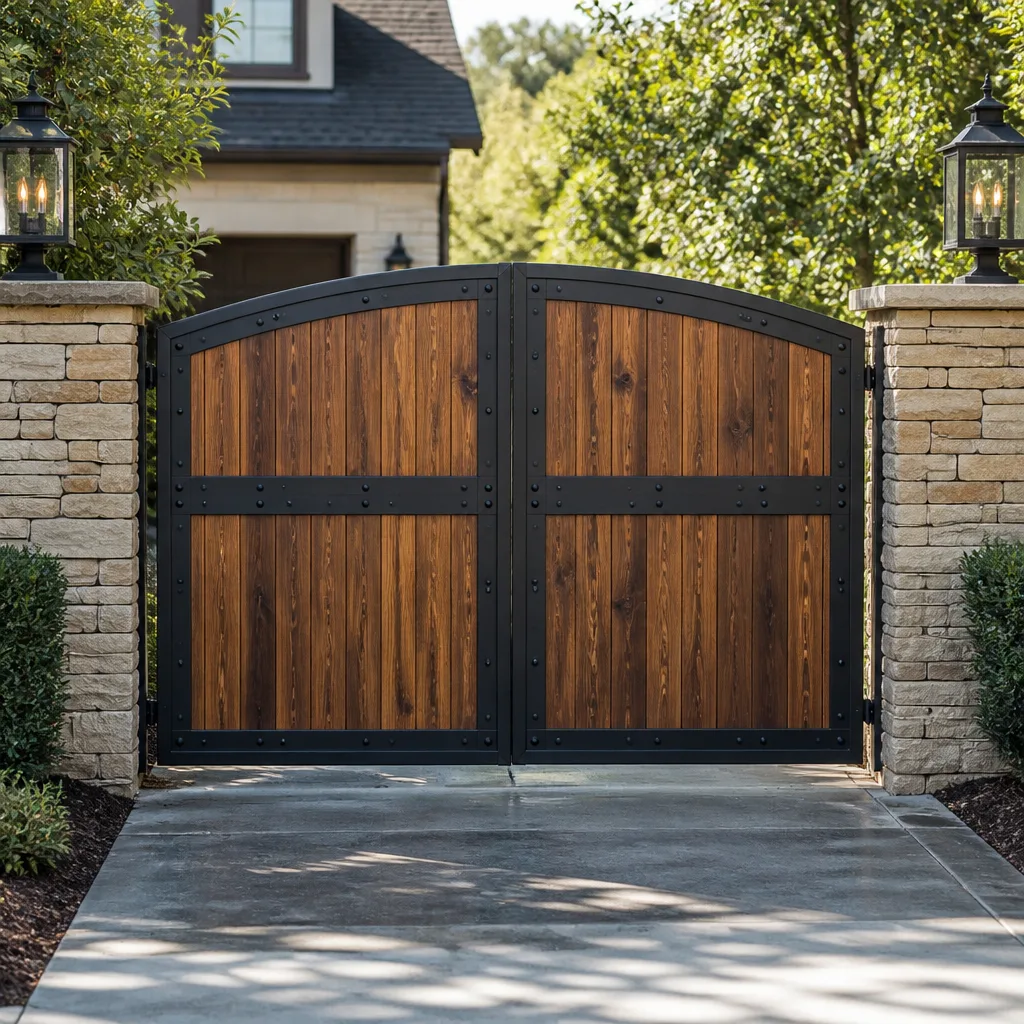 Wood & steel frame
 Farm & ranch
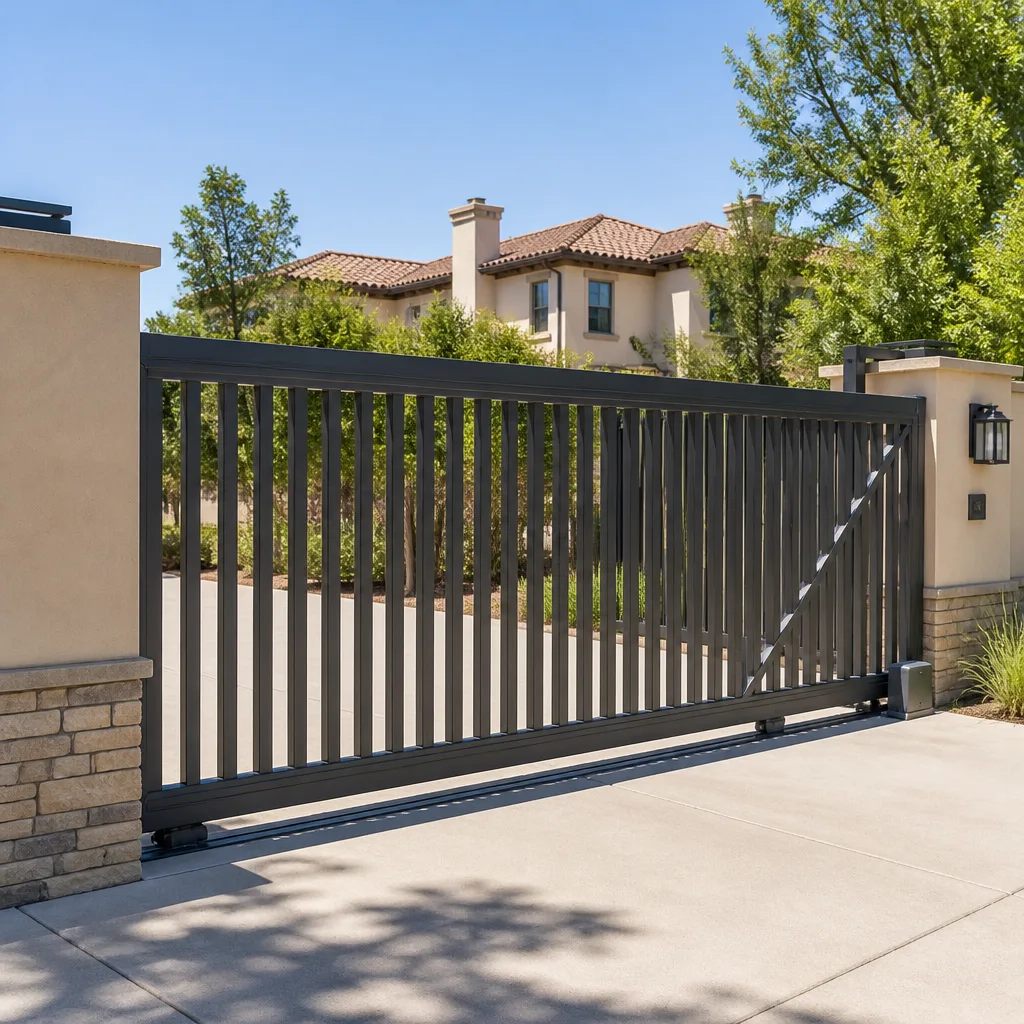 Sliding driveway gates
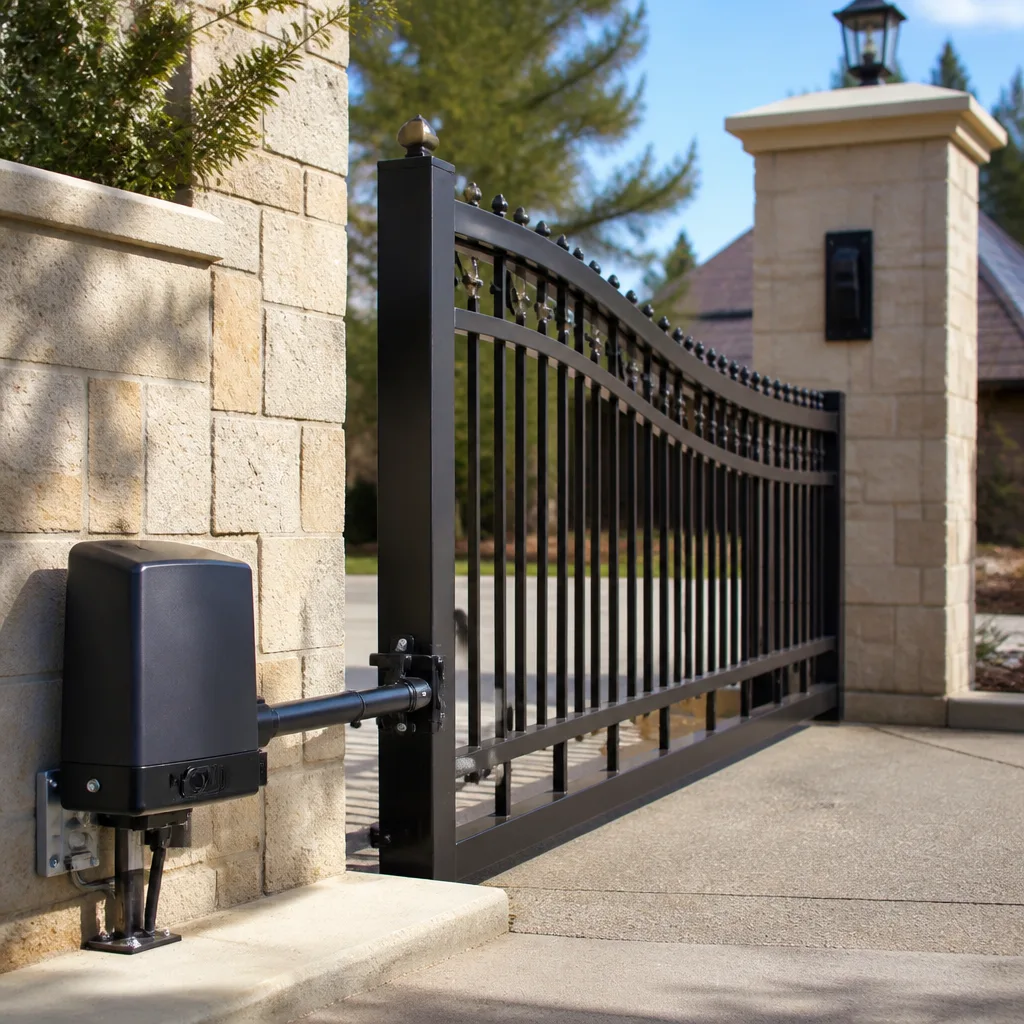 LiftMaster operators
Free on-site gate assessment - hinges, posts, and your LiftMaster or Nice gate operator checked before anything is quoted
The assessment is free and the quote is the invoice.
Get your free estimateThe Complete Guide to Gate Repair in San Antonio
San Antonio’s clay-heavy caliche soil can shift a gate post by nearly an inch between a wet January and a dry August. That movement, invisible to the eye but brutal on hinges, latches, and opener alignment, is why the same gate gets “fixed” three times in two years by technicians who never measure what the ground is doing. Most gate failures in San Antonio trace back to three overlooked culprits: caliche soil expansion, summer heat cycling on metal hardware, and mismatched replacement parts. This guide maps every repair type to its real root cause so you fix the right thing once, not repeatedly.
Styles & brands we work with
Quick Answer
Gate repair in San Antonio typically costs $180 to $650 depending on the failure, and around 70 percent of repeat failures stem from one of three local root causes: caliche soil shifting posts, summer heat warping or fatiguing metal components, or a mismatched part installed during a previous repair. A proper repair starts with diagnosing the cause, not just replacing the symptom. Warden Gate Repair San Antonio provides a written price before any work begins, so you know the full cost before you commit.
Table of Contents
- Why San Antonio Gates Fail Differently
- Types of Gate Repair by Material
- Caliche Soil and Gate Posts: The Hidden Culprit
- Mismatched Parts: Why Repeat Failures Happen
- What a Written Price Should Actually Itemize
- Questions to Ask Before Any Technician Touches Your Gate
- Gate Opener and Motor Repair: What Fails and Why
- Common Mistakes to Avoid
- When to Call a Professional
- Frequently Asked Questions
- The Bottom Line
Why San Antonio Gates Fail Differently Than Gates Elsewhere
San Antonio sits on a unique geological layer of caliche, a sedimentary rock that forms when calcium carbonate cements soil particles together. It looks like hard white or tan clay when dry and turns dense and sticky after rain. The problem for gates is what caliche does across seasons: it swells during wet months and contracts dramatically during the long dry stretch that runs from May through September. A gate post set into caliche soil can move measurably, sometimes three-quarters of an inch or more, depending on how deep the footing was poured and whether the concrete collar is still intact.
This is why gate repair in San Antonio is a different job than the same repair in Dallas or Austin. Up north in the blackland prairie, soil moves but not with the same extreme wet-to-dry swing. In San Antonio, a gate that operated perfectly through spring can start binding, dragging, or failing to latch by August without anyone touching a single component. The gate didn’t break; the ground under it changed.
In our experience repairing gates across Bexar County, from Alamo Heights to Stone Oak to the older neighborhoods around Woodlawn Lake, the post is the first thing we check. Not the hinges. Not the opener. The post. Because if the post has moved, every hinge and latch adjustment you make is temporary. You’ll be back out there in six weeks wondering why the same gate is sagging again.
What Actually Happens When Caliche Shifts a Post
- The post tilts away from or toward the gate leaf, changing the hinge geometry.
- The latch tongue no longer lines up with the strike plate, forcing homeowners to lift or slam the gate.
- The opener’s arm binds against the post bracket, overloading the motor and burning out capacitors.
- Weld points on wrought iron gates crack as the frame twists against a fixed post.
- The gate leaf scrapes the ground on one side, wearing through the bottom rail over time.
A proper repair accounts for this movement. That means resetting the post in a deeper footing with a wider concrete collar, sometimes adding a steel post sleeve, or replacing an undersized post with a heavier gauge that resists soil pressure better. It’s slower work than swapping a hinge, and that’s why it lasts.
Types of Gate Repair by Material: What Fails First in San Antonio
Wrought Iron Gates
Wrought iron gates in San Antonio neighborhoods like Monte Vista, Olmos Park, and Terrell Hills are often 20, 30, or 40 years old. The failures we see most are rust corrosion at the bottom hinge, cracked welds from years of heat expansion and contraction, and sagging from hinge pin wear. Summer heat is a real factor: a black wrought iron gate in direct San Antonio sun can reach 150 degrees or more, which causes the metal to expand and stress the welds. Repair involves grinding out cracked welds and re-welding, replacing hinge pins and greasable bearing hinges, and treating rust with a zinc-rich primer before repainting. A well-repaired wrought iron gate in this climate needs rust treatment at the bottom rail every 3 to 5 years.
Aluminum Gates
Aluminum gates don’t rust, which is why they’ve become common in newer San Antonio subdivisions like Alamo Ranch and Cibolo Canyons. But aluminum is softer than steel, and the failure pattern is different. Powder coating gets scratched and chipped, the metal underneath oxidizes to a white powder, and the gate eventually develops pitting that weakens thin-wall tubing. Aluminum gates also bend more easily when a strong wind catches them. Repairs typically involve straightening bent pickets, replacing corroded sections, and installing heavier-duty hinges with stainless steel pins. If you hear an aluminum gate creak, it’s usually a dry hinge or a bent frame rubbing against a picket.
Wood Gates
Wood gates are the most affected by San Antonio’s humidity swings. A cedar or pine gate absorbs moisture during the wet months and shrinks in the dry heat, which loosens joints and pulls screw holes out of round. The classic failure is a bottom hinge that has pulled free from the wood, leaving the gate dragging. In Bexar County, wood gates also face termite pressure, particularly in areas with heavy mulch beds or older irrigation leaks. A wooden gate repair that lasts requires using exterior-rated structural screws, not nails, and often adding a metal anti-sag kit that runs diagonally across the frame. If the wood is soft at the hinge mount, replacing the mounting board is mandatory, not optional.
Vinyl Gates
Vinyl gates fail more quietly. The material doesn’t rot or rust, but UV exposure breaks down the plastic over years, making it brittle. A vinyl gate in full San Antonio sun can crack at the corners or along the bottom rail after 8 to 12 years. Vinyl is also more prone to wind damage because it’s lightweight. Repairs involve replacing cracked sections (if the profile is still manufactured), reinforcing the internal frame, and sometimes upgrading to an aluminum insert for structural support. We tell homeowners that if a vinyl gate is brittle enough to crack from hand pressure, the entire leaf is near the end of its service life.
Caliche Soil and Gate Posts: The Hidden Culprit Behind San Antonio Gate Sag
Here’s the failure sequence we’ve documented more times than we can count. A homeowner calls us because a gate that worked for ten years suddenly won’t close. The hinge side looks fine. The latch side has dropped nearly half an inch. The previous repair company adjusted the hinges, replaced the latch, and charged a few hundred dollars. Six months later, it’s sagging again.
What actually happened: the post shifted. The wet winter of 2024 in San Antonio, with repeated heavy rain events, saturated the caliche around the post footing. The soil expanded. When the ground dried through the summer, the soil contracted and left a void. The post settled into that void, tilting just enough to throw off the entire gate geometry. Adjusting the hinges without fixing the post is like straightening a picture frame on a wall that’s slowly leaning over.
How a Proper Caliche-Aware Repair Works
- Measure the post angle with a digital level in both directions. Anything more than 2 degrees off vertical on a loaded post is a problem.
- Check the concrete collar around the post base. In San Antonio, we routinely find collars that were poured only 8 to 12 inches in diameter, which is undersized for caliche soil. A proper collar should be at least 18 inches in diameter and extend below the frost line (not a factor here) into stable subsoil, typically 30 to 36 inches deep.
- Excavate the old footing if the post has shifted more than a few degrees, or if the concrete is cracked. This is the step most repair companies skip because it’s labor-intensive.
- Re-pour the footing with proper drainage grading so water runs away from the post, not toward it. In San Antonio’s heavy rain events, poor drainage around a gate post is a guaranteed way to restart the caliche expansion cycle.
- Set the post in a steel sleeve or use a heavier gauge post than the original, especially for gates over 6 feet wide. The added steel resists the lateral pressure from expanding clay better than a thin-wall post.
- Re-hang the gate and align the opener once the post is stable. This is the correct sequence. Hinge adjustments come last, after the foundation is right.
If you live in an area of San Antonio with particularly reactive soil, like parts of Helotes or Schertz where caliche sits close to the surface, this is almost certainly part of your repair history. The ground is the root cause. Everything else is downstream.
Mismatched Parts: Why the Same Gate Fails Twice
The second overlooked culprit in San Antonio gate repair is the replacement part that doesn’t match the original system. This happens more often than homeowners realize, and it’s almost never malicious. It’s usually a technician working with what’s on the truck.
Here’s a real example from the field. A homeowner in the Stone Oak area had a sliding gate with a failed limit switch. The repair company that came out didn’t have the correct DoorKing limit switch on hand, so they installed a generic switch that physically fit but operated at a different voltage tolerance. The gate worked for three weeks, then the switch burned out, and the technical failure took the opener’s logic board with it. The homeowner paid for a cheap repair, then paid again for a full board replacement that would have been avoided entirely with the correct part.
The Most Common Mismatches We See
- Wrong gauge steel on replacement pickets or frame sections. A 16-gauge picket welded into a 12-gauge frame creates a weak point that will bend or crack under normal cycling. It also changes the gate’s weight balance, throwing off the opener’s limits.
- Incompatible opener logic boards. A Viking board is not a Linear board is not a BFT board. Some boards share physical connectors but run different firmware and voltage requirements. Installing the wrong one can work briefly and then fry, or it can disable safety features without any visible warning.
- Undersized hinge pins or hardware. Using a 3/8-inch pin where the original was 1/2-inch loads the hinge unevenly and accelerates wear. The gate will sag again within a year.
- Universal remote receivers wired into older openers without proper isolation. This can create phantom activations or drain the control board.
- Mismatched capacitor specifications on gate motors. A capacitor with the wrong microfarad rating will either underpower the motor or overheat it. Both lead to early failure.
How to Verify Parts Match Before Work Begins
- Ask the technician to identify the exact brand and model of your gate opener before they touch anything. If you have a LiftMaster, a Linear, a Ghost Controls, or a DoorKing, that brand name should be the first thing they say.
- Request the part number of the component they plan to install. A professional technician should be able to provide this from a catalog or manufacturer database.
- Verify the part is authorized by the original manufacturer, not a generic aftermarket equivalent. Generic parts sometimes work. They also sometimes fail in ways that void the manufacturer warranty on the rest of the system.
- Ask whether the replacement matches the original voltage and load rating. If the technician can’t answer, that’s a red flag.
- Get the part specification in writing on the same document as the price. This protects you if the wrong part is installed and fails.
Warden Gate Repair San Antonio services, maintains, and repairs equipment from nine major gate and opener brands, including DoorKing, Linear, Viking, and Ghost Controls. That factory-trained service means the right parts and the right knowledge arrive together, from the first appointment.
What a Written Price Should Actually Itemize
Here’s something most homeowners don’t know: a written price that’s a single line item, “gate repair: $450,” is not a written price in any useful sense. A real written price itemizes exactly what you’re paying for, so you can compare it against what’s actually done when the technician arrives.
In San Antonio, where gate repair labor rates are lower than Dallas and Houston but parts costs run about the same, a proper written quote should break down like this:
A Proper Gate Repair Quote Look Like This
- Trip fee: Usually $45 to $75 in San Antonio, often waived if the repair is approved on the same visit. Ask whether the trip fee applies.
- Parts: Each part should be listed by brand, part number, and unit price. Not “hinge assembly.” It should say “LiftMaster Hinge Assembly, Part #LM-400M, $68.50.”
- Labor: Typically $85 to $140 per hour for gate repair in the San Antonio market, with most residential repairs taking 1.5 to 3 hours.
- Warranty terms: The specific warranty period for each part and for the labor. If the part has a 2-year manufacturer warranty and the labor has a 365-day workmanship warranty, both should be written.
- Total with tax: The final number you’re expected to pay, not an estimate that could grow.
Warden Gate Repair San Antonio delivers a written price before any work begins, every time, with no surprise line items at the end. That’s not a courtesy. It’s the way the whole transaction should work. If a company won’t put the number in writing before they open their tool bag, find another company.
Questions to Ask Before Any Technician Touches Your Gate
The person who comes to your door to fix your gate is a guest on your property. In San Antonio, where porch piracy and unlicensed contractor fraud are regular news items, the threshold of your home deserves more caution than a quick online booking. These are the questions we recommend every homeowner ask before opening the door, and the answers you should expect.
- “Can you send me a photo and name of the technician before they arrive?” A professional company will say yes without hesitation. Warden Gate Repair San Antonio follows what we call the Threshold Standard: every technician is background-checked, identity-verified, photo-badged, and sent to the customer by name and photo before arrival. The photo ID badge is shown at the door, every time, before the technician steps inside the gate line.
- “Are you licensed and insured for this type of work in San Antonio?” The technician should be able to name their insurance carrier and coverage type. General liability insurance is standard. If a technician says they don’t need insurance because “it’s just a gate,” end the conversation. And note that San Antonio doesn’t require a specific state license for gate repair (Texas doesn’t have a dedicated gate contractor license), but a legitimate company will still carry commercial liability insurance and can prove it.
- “Can you give me a written price before any work starts?” The answer should be yes, without qualifiers. A written price with itemized parts, labor, and warranty terms is standard for legitimate gate repair in San Antonio. If a technician wants to start work and “figure out the price as we go,” that’s a red flag.
- “What brands do you actually service?” If your opener is a DoorKing, the technician should recognize the brand immediately and be able to talk about DoorKing-specific control boards, limit systems, and common failure points. A technician who says “they’re all the same” may be about to install a generic board into a system that needs a specific one.
- “Do you warranty the repair, and what happens if the same problem comes back?” Every legitimate gate repair company in San Antonio should offer a workmanship warranty. At Warden Gate Repair, we back every repair with our 365-Day Done Right Promise: if the repair isn’t right, we make it right, and the return visit is free. That promise is in writing before we start.
Gate Opener and Motor Repair: What Fails and Why in the San Antonio Heat
A gate motor (the box that slides or swings your gate automatically) is the most frequently misdiagnosed component in the entire system. Homeowners call and say “the motor is dead,” and about half the time, the motor is fine. The real problem is upstream: a failed capacitor, a burned relay, a tripped thermal overload, or a limit switch that’s out of adjustment.
In San Antonio’s climate, heat is a specific stressor. Gate motors mounted in direct sun inside a metal enclosure can reach internal temperatures of 130 to 150 degrees during summer. That heat accelerates capacitor degradation (the same failure mode that kills air conditioner capacitors) and shortens the life of the motor’s electrolytic components. A motor that’s 8 years old and has been running in a hot enclosure through five San Antonio summers is a motor approaching the end of its service life, regardless of brand.
The repair sequence for a gate opener issue starts with diagnosis, not replacement. Here’s the process a professional uses:
- Verify incoming power at the outlet or disconnect, including checking for a tripped GFCI or a burned breaker.
- Test the capacitor with a multimeter. A weak capacitor can cause a motor to hum without turning, or to start slowly and trip the overload.
- Inspect the limit switches and travel adjustment. In many cases, the opener “failure” is just a switch that’s slipped out of position, causing the gate to stop mid-cycle or reverse incorrectly.
- Check the control board for burn marks, swollen capacitors, or heat damage. This is where San Antonio heat takes its toll. A board that’s been cooked for years will show visible discoloration.
- Test the safety edges and photo eyes. These are the safety components that stop the gate or reverse direction when an obstruction is detected. If they’re misaligned or non-functional, the gate may refuse to operate at all, even though the motor is fine.
- Repair or replace the failed component with the correct brand-specific part, not a generic substitute.
We work on Linear, Viking, Ghost Controls, and DoorKing openers, among others, and the failure profiles differ by brand. Linear openers tend to be durable but show control board relay wear over time. Viking systems are common on commercial and large residential gates and usually require correct tension spring adjustment. Ghost Controls is popular on light residential swing gates and has a well-documented sensitivity to voltage fluctuations. DoorKing is a workhorse brand but its limit mechanisms need periodic alignment. Knowing which brand you have matters when ordering parts and diagnosing faults. Our Electric Gate Repair in San Antonio coverage explains the diagnostic process in depth.
Common Mistakes to Avoid
- Adjusting hinges without checking the post. In San Antonio’s caliche soil, a sagging gate is usually a post problem, not a hinge problem. Adjusting the hinge masks the symptom and the repair fails within months.
- Accepting a single-line-item price. A quote that says “gate repair: $500” without itemizing parts, labor, and warranty terms tells you nothing about what you’re actually buying. Demand the breakdown.
- Letting a technician install a generic replacement part without seeing the part number. The wrong board or the wrong capacitor will fail again, and this time it may take the rest of the system with it.
- Ignoring drainage around the gate post. In San Antonio’s wet winters, water pooling at the post base saturates the caliche and accelerates post movement. Keep soil graded away from the post.
- Lubricating hinges with WD-40. WD-40 is a solvent, not a hinge lubricant. It strips away the existing lubricant and leaves metal dry. Use a silicone-based lubricant or white lithium grease on gate hinges.
- Delaying a repair because the gate “still works.” A gate that’s binding, scraping, or groaning is wearing out faster every day. The repair that’s $250 today could be $900 in eight months when the post has moved further and the motor has burned out trying to push against the misalignment.
When to Call a Professional
If your gate post has visibly moved, if the gate drags or won’t latch, if the opener makes noise but doesn’t move the gate, or if you hear a grinding sound from the motor, those are not DIY repairs. Caliche-related post movement requires excavation and re-pouring, which is skilled work. Opener and motor repair involves electrical components that carry line voltage, and a wrong connection can damage the control board or create a shock hazard.
Gate repair in San Antonio is worth getting right the first time because the alternative is paying for the same repair twice. Warden Gate Repair San Antonio offers free estimates in San Antonio. Our Gate Motor Repair in San Antonio page covers motor-specific issues, and for a full overview of what we do, start with our Gate Repair in San Antonio service page. Call (940) 531-3336 to schedule.
Frequently Asked Questions
Gate repair in San Antonio typically costs between $180 and $650 for most residential repairs, with the difference driven by the type of failure and the parts required. A hinge replacement or latch alignment runs on the lower end, while a post reset with a new concrete footing and opener re-alignment runs on the higher end. Call (940) 531-3336 for an exact written quote, no obligation.
Look for three signs: a gap that widens or narrows between the gate leaf and the post, a latch tongue that no longer aligns with the strike plate, and visible cracking in the concrete collar at the post base. In San Antonio’s caliche soil, these symptoms typically appear after the wet winter to dry summer transition. A digital level will confirm the post is off vertical.
Many gate repairs in San Antonio can be completed the same day, especially hinge replacements, latch alignments, and opener board or capacitor replacements. Post resets require excavation and concrete curing time, so those repairs are scheduled over two visits. Warden Gate Repair San Antonio answers calls live 24/7, so you can talk to a real person immediately about scheduling.
Warden Gate Repair San Antonio services nine major gate and opener brands, including LiftMaster, FAAC, BFT, Linear, Viking, Ghost Controls, DoorKing, Elite, and Mighty Mule. We carry or order brand-specific parts so the replacement matches the original equipment. Using factory-matched parts is one of the key ways we prevent repeat failures.
Yes. Every Warden Gate Repair technician is background-checked, identity-verified, photo-badged, and sent to you by name and photo before arrival, following what we call the Threshold Standard. The photo ID badge is shown at the door before any work begins. That standard applies to every visit, no exceptions.
If a repair we complete fails within 365 days due to a defect in workmanship or a part we installed, we return and fix it at no charge. The promise is written into every quote and invoice, and it covers the full repair, not just the part. It’s the guarantee that backs our Warden Gate Repair San Antonio home service commitment.
The Bottom Line
Gate repair in San Antonio is a local trade with local failure patterns. The caliche soil moves the posts. The summer heat fatigues the metal and cooks the capacitors. The mismatched parts installed by a rushed technician create failures that look new but are just the old problem resurfacing. A repair that addresses the real root cause, with a written price before work starts and a technician you can verify at the door, is the only repair worth paying for. For more guides & resources, visit our blog. That’s the standard we hold ourselves to at Warden Gate Repair San Antonio, and it’s the standard San Antonio homeowners should demand from anyone who touches their gate.
Call (940) 531-3336 for a free estimate, or browse our Gate Repair in San Antonio page to learn more about how we diagnose and fix the specific problems covered in this guide.
Written by Cole Rafferty, Owner at Warden Gate Repair San Antonio, serving San Antonio since 2008.
See the difference
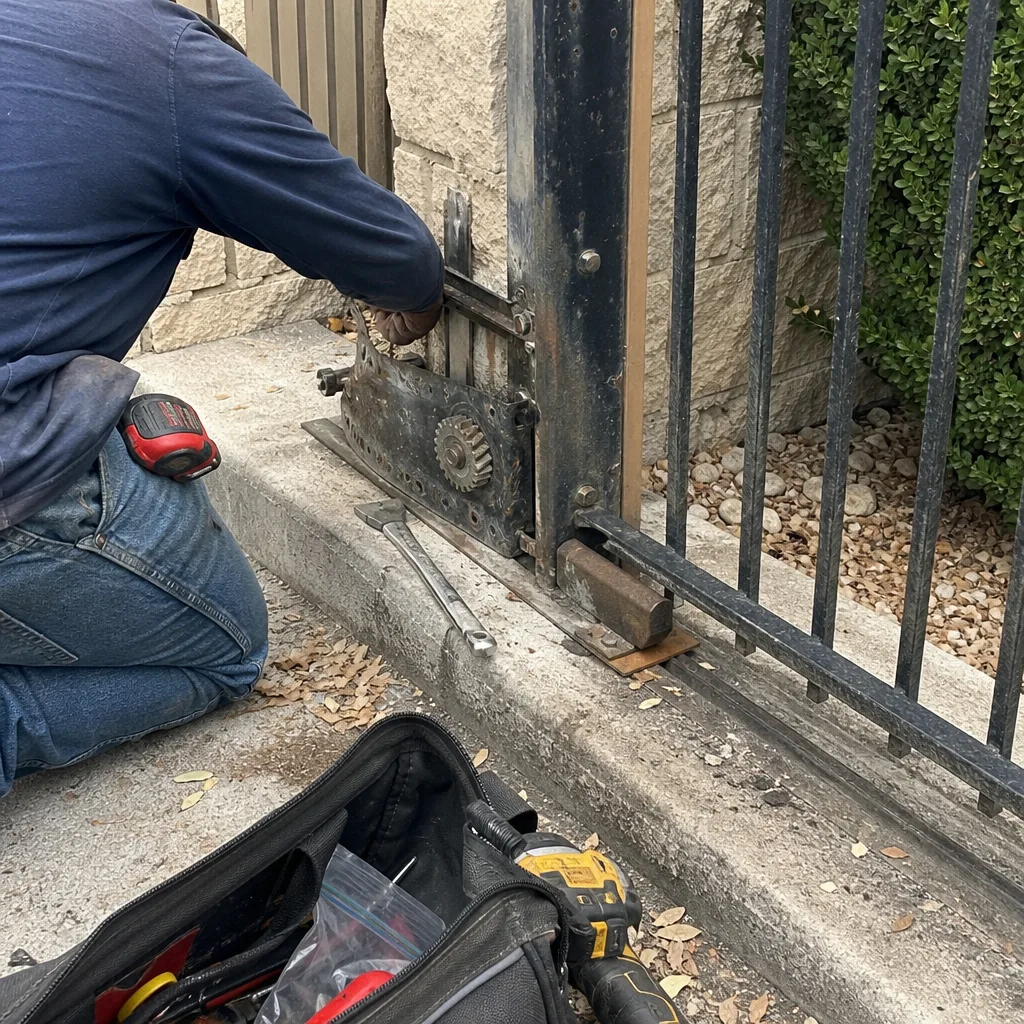 Before
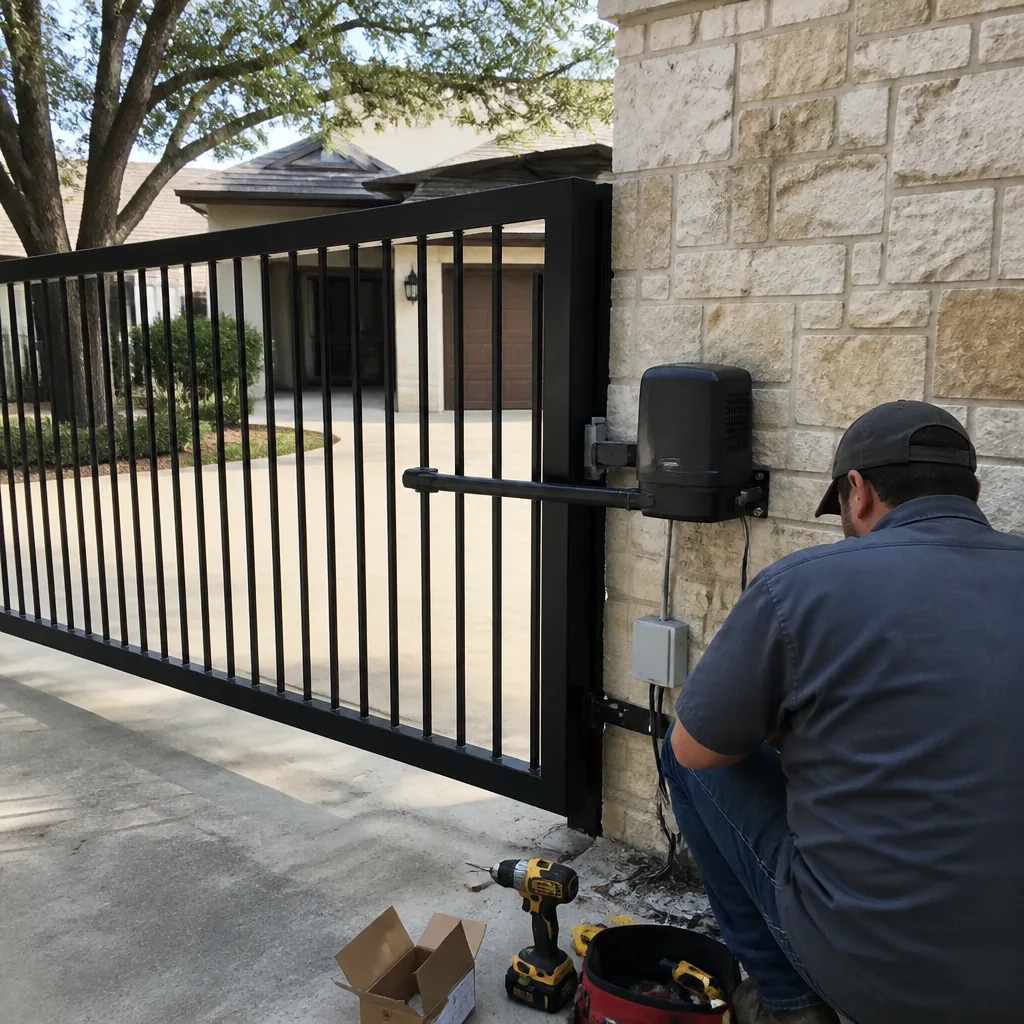 After
After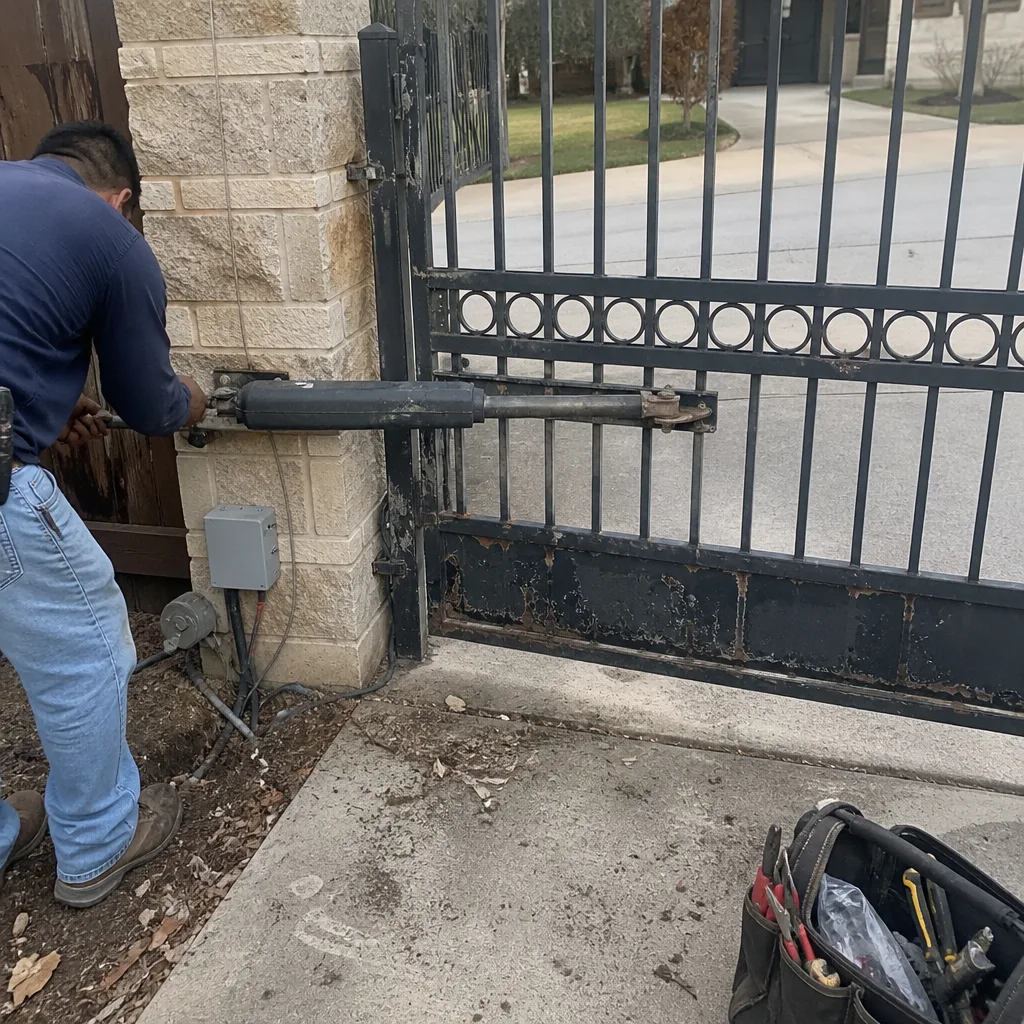 Before
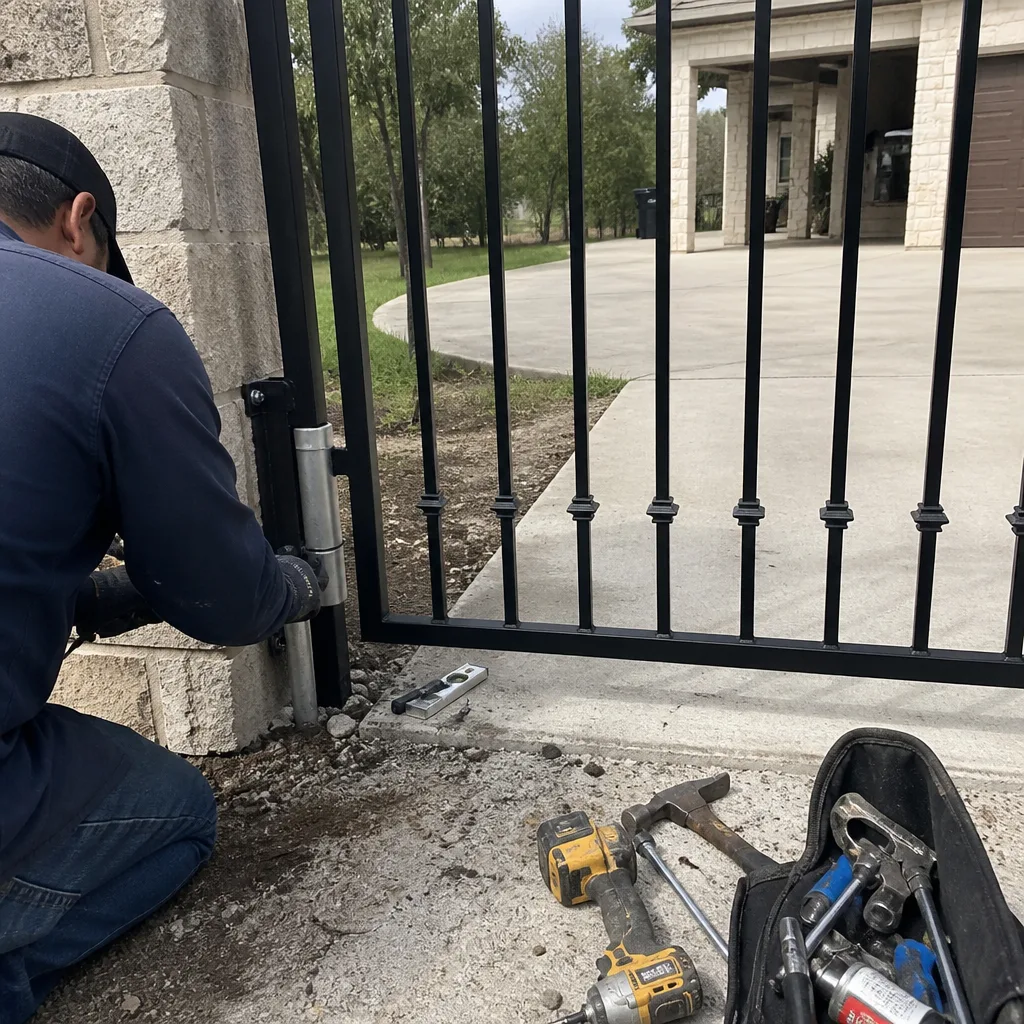 After
After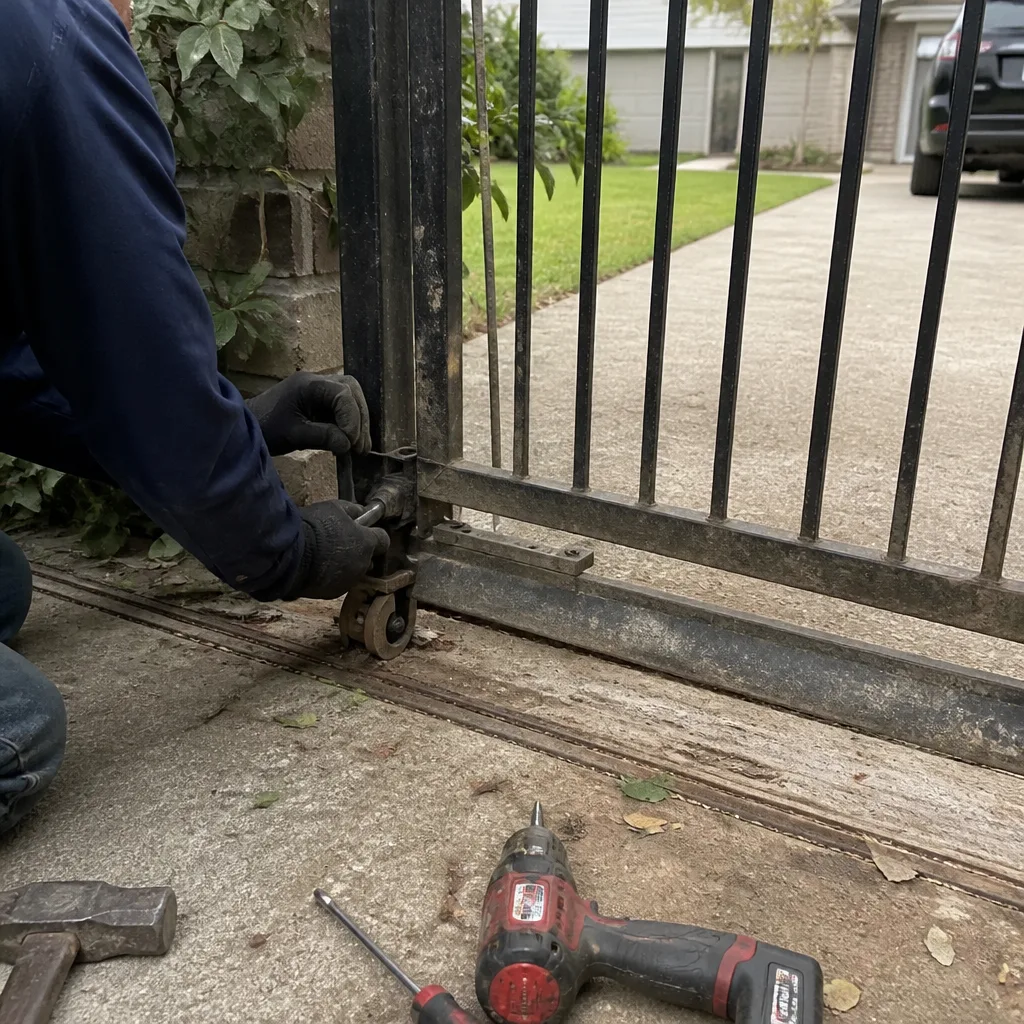 Before
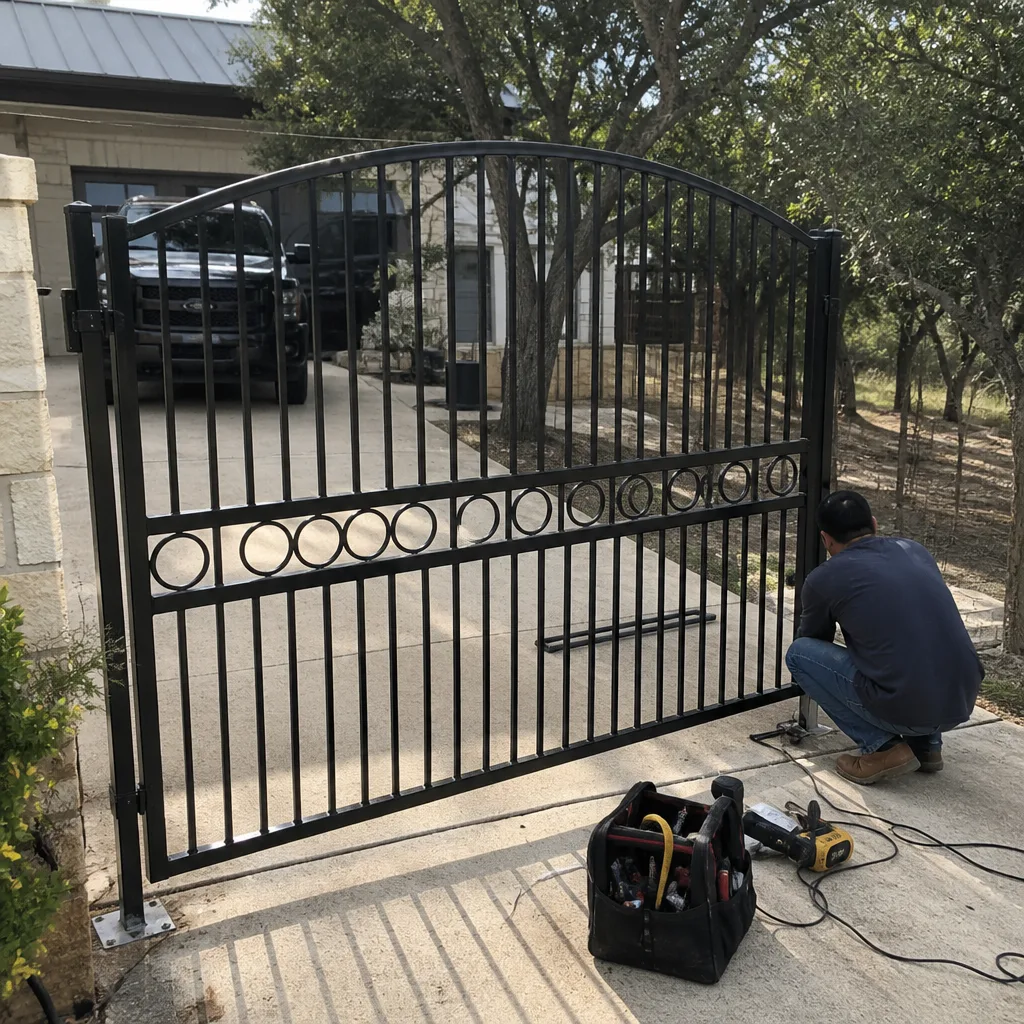 After
After